jacobgold
4 hours ago
At this point, no one seems capable of keeping a large database safe. I assume all medical and biographical information that exists is in the hands of the major state actors.
China hacked 22.1 million records of US government employees:
https://en.wikipedia.org/wiki/2015_Office_of_Personnel_Manag...
tyre
7 minutes ago
Yes, huge amounts of your medical information is for sale. In 2024, Change Healthcare (CHC) was hacked and held ransom. The hackers were in the system for over a week before everything was pulled offline.
CHC is the largest claims clearinghouse in the US; about 100m people's insurance claims go through there each year.
The hackers asked for a ransom ($35m iirc) to delete the data, which United Healthcare (who owns them, because of course they do) paid. But it seems that the collective negotiating on behalf of the actual hackers rug pulled, so the actual hackers didn't get paid.
This is more than simply medical records. It includes who is active duty military and their family. If you can map where soldiers are, you know roughly the size of different military bases. If you know which types of capabilities are operated out of which bases, you can get a pretty good look of how the US is allocating personnel.
It was crazy working on recovery from this at the time. It should have been front page news, but wasn't.
coldpie
3 hours ago
It is unthinkable to me that anyone believes there is such a thing as computer security after so many years of nonstop hacks and leaks. If you have a computer and it is connected to a network with access to the Internet, assume that computer is semi-public. Meaning, if someone was interested enough in accessing your computer, they could do it. Do not hook any computer with access to anything that would be devastating if it was made public to the Internet. Do not put anything that would be devastating if it was made public onto someone else's Internet-connected computers.
For example, do not hook your goddamn water or traffic or electricity infrastructure up to the goddamn Internet, and then, do fire the guy who suggested it.
The correct analogy for computer security is not locks and keys and doors and gates. It is a house in a floodplain. Your house will not survive the flood of it hits you. Do not store anything critical or irreplaceable in that house.
josephg
3 hours ago
> It is unthinkable to me that anyone believes there is such a thing as computer security after so many years of nonstop hacks and leaks.
Of course there is. For example, SeL4’s security and reliability proofs still hold in the world of LLMs. The problem is that most software isn’t written on that firm foundation. Instead, most software is made by people with the philosophy of “if it looks like it works, ship it”. You don’t get secure software by working like that, because security vulnerabilities aren’t visible.
We - humans - know how to write secure software. Just like we know how to make safe aeroplanes. The problem isn’t that we lack the capability to make secure computers. The problem is we don’t have a culture of security. Secure software is - somehow - niche. And as such, it’s much more expensive. And nobody wants to pay.
taurath
an hour ago
> Instead, most software is made by people with the philosophy of “if it looks like it works, ship it”.
I work in secure systems and it’s shocking how many people believe this - the incentives from management are all about it too.
Veserv
21 minutes ago
> The problem isn’t that we lack the capability to make secure computers.
Depends on the "we". "We" have the capability to make secure computers like how "we" have the capability to make EUV lithography machines. There exists a relatively small number of people and organizations in the world who can do so. Microsoft does not have that capability. Google does not have that capability. Linux does not have that capability. Amazon does not have that capability. Apple does not have that capability. Cisco does not have that capability. IBM does not have that capability. etc. All of those organizations have tried for literal decades, thumped their chests about how they have awesome security year after year, and yet have totally and utterly failed despite their best efforts.
Acquiring the capability to do so is difficult and challenging and requires years to invent if you start right this very second and know what you need to do, which these organizations emphatically do not. We need security at scale and fast. The only way forward is to scale up working solutions rather than letting the bozos who put us in this spot fail at scale with yet another promise that this time for sure they will solve the problem they have repeatedly failed at for decades.
iugtmkbdfil834
an hour ago
<< And as such, it’s much more expensive. And nobody wants to pay.
Eh. If only it was that simple. I mean, yes, money is always a factor, but not nearly as big of a factor as 'my convenience outweighs pretty much everything ( until it causes sufficient amount of havoc.. and even then.. )'. You can see it in just about everything. It is not just the money. It is the convenience that drives most of the unsecure behavior.
fragmede
14 minutes ago
Yeah it's about costs. I care about a lot of things, but the causes I actually give money to is a much shorter list. If personal data was radioactive, and leaking it cost companies real money, then more money would get spent on security. (and insurance, and lawyers.)
josephg
11 minutes ago
Yeah I've long said we should treat data leaks like food safety. The only way we'll see software security improve is if there were serious fines and/or jail time for leaking user data due to negligence.
msla
2 hours ago
The bank has the best doors, the best locks, and the best cameras, and it is patrolled by a guard who props the doors open to so he doesn't have to keep fooling with the locks and points the cameras the other way to extend his smoke break. SeL4 would be another system used by humans.
timschmidt
2 hours ago
It's always possible to break a perfect system by moving an additional layer of abstraction outward, and attacking one of the assumptions upon which it's built. Some of our era's highest security systems - game consoles - have been broken by undervolting them until the logic failed.
josephg
3 minutes ago
> It's always possible
It's often possible. But not all systems are vulnerable to undervoltage attacks. For example, I don't think the iphone secure enclave is vulnerable to this.
And good security uses "defence in depth". Multiple layers which each individually need to be compromised to break the whole thing. To hack chrome, you need a vulnerability in the renderer or VM. Then you also need a sandbox escape, and a way to use that to attack the browser's parent process. This is much harder to do.
nailer
2 hours ago
I once worked on AUD 450M banking project, the root password was kept in a kickstart file and unchanged, root SSH was allowed. The bank didn't care until I told the external security auditor who included it as part of their report.
warkdarrior
2 hours ago
Snitch
awesome_dude
an hour ago
There's absolutely no way to account for humans, who can be tricked, or pressured, or just make human sized mistakes.
josephg
22 minutes ago
Again, of course there is.
Decades ago, I worked in a bank in an old building. The door had a card reader for access. You boop your card and the door opened. People would hold the door open for each other all the time out of politeness, even when they didn't know each other. Security told us not to do that, but it's hard to convince people to stop being polite.
I had a laptop stolen from my desk in a place like that once. (Not a bank - but similar door-card reader system). This guy came in in the middle of the day, wearing overalls. He confidently walked through the door after someone, like he belonged there. He walked up to my desk, swiped my laptop and just strolled out.
At the bank, they've replaced the door with mechanical gates and a security guard. The gates - physically - only let one person to walk through at a time. You can't hold a gate open any more. And the security guards stop anyone who tries.
Is it 100% foolproof? No. But it's way more secure. It would have stopped that laptop thief.
There's this pernicious, defeatist attitude that if you can't make a system 100% secure, so you shouldn't try. That's misguided. Most systems can be made orders of magnitude more secure than they are today. It just takes a bit of care and work.
kulahan
31 minutes ago
Then there's no such thing as security.
By the way, there are countless ways to account for humans. There are entire branches of engineering devoted to this. If you don't want someone to leave the bank with a pen customers use for signing checks, you just chain it to the desk. If you don't want the installer to forget to put the pen-chain in, make a photo of the chain part of the checklist required to get paid. If you want to... etc.
The idea is that you determine an acceptable level of risk, then secure to that level. Maybe the acceptable level of risk chosen by companies is wrong. Maybe we need to increase that risk exposure via heavier fines and regulations. Maybe the cost of reducing that risk is too high already. Maybe we need to fund that. Maybe it's too confusing and we need to research better standard practices. I dunno. But this is not some unsolvable problem.
galangalalgol
33 minutes ago
Air gaps are not magical, they will not stop the flood. The electrical grid has to communicate with itself to load balance, so you can run dedicated wires with giant cut-me signs pointing at it, or you can use symmetrical key encryptors to route it over the intenet. You needed to use the encryptors anyway, so why not. If bad software gets in via thumb drives music disks etc (and it will of the flood is pointed at you) it can still do bad things. But so can a hunting rifle pointed at a transformer station. That nearly blacked out all of socal once.
shepherdjerred
3 hours ago
It used to be that nothing was secure but that was OK because at least adversaries would have to expend effort. If you are one of a million companies why would anyone hack you. Maybe if you are a target you need a lot of investment, but most orgs only prevent the most egregious of vulnerabilities.
The calculus has certainly changed. Hacking is becoming even more frequent and… I’m not really sure what the equilibrium looks like.
It’s not really an option to stop using computers or networks. But it’s going to be way too expensive (or maybe even impossible) to secure even just critical systems.
Maybe banks and governments can secure themselves (and that’s a big IF) but it really feels like something fundamentally has to change.
autoexec
2 hours ago
> Maybe banks and governments can secure themselves (and that’s a big IF) but it really feels like something fundamentally has to change.
The problem is that most companies don't care if they get hacked so long as the hackers are just taking data and not interfering in their ability to bill customers and make money.
They face zero meaningful consequences if their data gets leaked. The money they save by not taking security and employee/customer privacy seriously will more than pay for the year of "identity protection" they'd have to pay for (assuming the hack gets found out) anyway.
They actually care about ransomware, but most of the time that's also something they can comfortably buy their way out of. We've seen a lot of companies pay off ransomware gangs rather than invest in the kinds of robust backups that would make recovery possible/less painful than rewarding the hackers.
What's needed for change is regulation with actual teeth that makes not protecting their data either meaningfully expensive or criminal resulting in executives spending time behind bars for their negligence. Without that, things are only going to get worse, especially as companies experiment with using AI and increase dependence on third parties and cloud providers who themselves become rich targets.
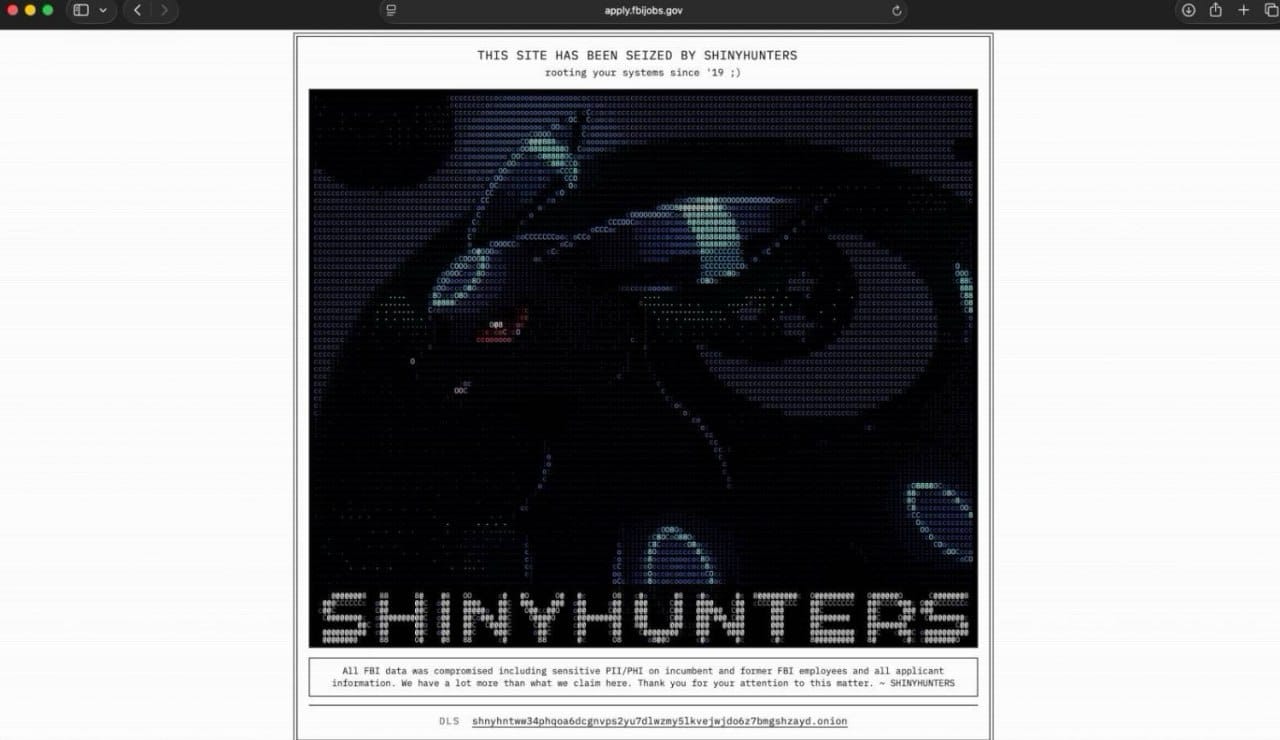
That probably still won't help the FBI though. Our government isn't exactly big on holding themselves accountable or even prioritizing competency right now.
pixl97
3 hours ago
>The calculus has certainly changed.
Adding AI into this really is just changing it to how much money your adversary is willing to spend to break in. The moment one crack in the armor shows up countless agents with unending patience can start embedding themselves everywhere in timeframes way faster than human actions. You could quickly find out all the special sauce for your company has been copied who knows where.
Working with banks when the Glasswing/Mythos first came out and they were given access to it has given me direct access to their infosec departments that are panicked. They've been sitting on piles of bugs for years that were low risk enough, and they have seen in their own tests how fast they can be probed.
Worse those infosec systems that have identified the risks in their software that aren't yet fixed are nuclear waste vats just waiting to get spilled to the wide world.
BoxwoodSeed
3 hours ago
I am reminded of the scene of a guy walking through various layers of security to access a computer that isn't connected to any network and still wonder what the hell this guy's job was in Mission Impossible (1996). The data got stolen either way, because of course it did, but what highly sensitive work can you even do on a computer not connected to any network?
If there's too much security in the way, it seems to me that work becomes impossible.
coldpie
3 hours ago
We had water and traffic control and electricity for decades and centuries before the Internet. It is less convenient and more expensive, but it also means hostile countries can't literally poison your drinking water from across the planet. It's not a difficult trade to consider.
burpingtree
an hour ago
Is it really more expensive to not connect a water treatment plant to the internet? I can imagine the vendor selling that idea but I struggle to come up with how that could make a water treatment plant cheaper to operate.
nostrademons
an hour ago
The expense usually comes in operations. By connecting the water treatment plant to the Internet and making it remotely operable, you can have one guy who sits in an office and is responsible for overseeing the water quality at many different treatment plants. If everything is local, you need one guy on site at each different plant. People are expensive, software is cheap.
Of course, by making it remotely operable, that one guy could be replaced with a guy in Russia who's job is to poison everyone.
kulahan
29 minutes ago
>what highly sensitive work can you even do on a computer not connected to any network?
rzzzt
2 hours ago
William Donloe is played by Rolf Saxon, he's an analyst working for the CIA in the movie. A different installment of the series reveals additional information!
Veserv
2 hours ago
Ah yes, the parable of the bear. There are a million people stuck in a valley and two bears. You do not need to outrun the bears, you just need to outrun at least two other people. But it turns out one of those bears is male and the other is female. So next year there are more bears, but you still just need to outrun a few people. Then one day, there are 1 million bears and they eat you all. Very inspiring story.
Software security has just been a fun time of ignoring the exponentially growing number of bears for the last few decades so you can continue to use systems unfit for the threat landscape because they are cheap.
throwup238
3 hours ago
> It’s not really an option to stop using computers or networks. But it’s going to be way too expensive (or maybe even impossible) to secure even just critical systems.
Admiral Adama says otherwise.
shepherdjerred
3 hours ago
The military has significantly different incentives.
Even just consider banks and e-commerce. They are hugely lucrative and making them even a tiny bit less accessible directly impacts their revenue. As an example, Amazon seeing that latency has a measurable effect on purchase behavior.
Maybe the military (fictional or otherwise) can go back to the ARPANET but most economic activity created by the internet cannot afford to disconnect
kridsdale1
3 hours ago
So say we all.
pixl97
3 hours ago
I mean he is a fictional character.
In the real (fake?) world the toasters would shoot smart dust all over your crap that would assemble back on your circuits creating radios between all the different components. They were fighting an adversary that was far more advanced than them.
SilentM68
3 hours ago
That's actually funny. I was going to add Gipsy Danger being analog, but it's a totally different scenario.
jjmarr
2 hours ago
We will tolerate it. Companies will make robust identity verification schemes to enable agentic commerce. And it helps reverse hacking, making it a no-brainer.
Let's say my cryptosig gets hacked by SkyNet, or my agent goes rogue. Either way someone files a million loan applications in my name! Normally my agent uses that to buy $200/month of Funko pops, or negotiate my recent purchase of a used car.
I get the notification from my cryptosig company. I freak out, report as fraud, and wait.
They comp the $3000 advance on my loan the scammer managed to withdraw, and I get off scott free, changing nothing about my behaviour.
If cryptosigs meant I am liable for someone stealing my identity like in 2026, I wouldn't use them. I'd negotiate everything myself with document scans, or god-forbid go in person since only I can legally bind myself under my own name.
That sucks! Nobody gets a commission when I make deals with a government ID. Startups don't even allow it as cryptosigs are more secure than scanned passports.
I don't want to do that either. When I was 18, I got swindled by a human salesperson into a $1400/month 27% APR muscle car when human soldiers got signing bonuses. It was face-to-face and they were smarter.
When I let AI own the budget, it leased me a mostly depreciated BMW from another AI for $500/month. The models are mostly the same now and always settle close to the Nash equilibrium.
I was so grateful that I selected a 40% tip for the AI. I wouldn't want to make things awkward with the companion I spend 8 hours a day talking to, after all. To avoid a conflict of interest she only accepts voluntary fees.
GolfPopper
3 hours ago
Many years ago, I regularly played cyberpunk tabletop RPGs with a number of other computer-inclined friends. We all used to laugh at ridiculousness of a key assumption of the game - the idea that giant corporations would ever connect their internal networks, full of valuable data, to the larger global telecommunications network.
shockwaverider
3 hours ago
What could possibly go wrong - I worked in intelligence in the 80s and one day there was this story about the office of personnel management being hacked and I was like “Thank God all my shit is on microfiche in some dusty basement filing cabinet, like who would be so stupid as to scan that shit into a computer?” Sure as shit, like a few months later I get the letter that my whole TS/SCI clearance documents had been stolen :-)
sippingabonedry
3 hours ago
A generation of coders who can't/are scared to write "Hello world" in C without Claude doing it for them has not helped.
sneak
2 hours ago
Two things:
Claude hasn’t been around for a generation yet.
It’s a good thing that people are scared to hand write memory-unsafe languages. 50 years of exploitation has finally sunk in…
mysterydip
an hour ago
How do we know the models are writing memory-safe code? How will people who haven’t written it audit the output?
passwordoops
3 hours ago
I think you're exaggerating a bit.
Does this answer your question?
/s
sippingabonedry
3 hours ago
I've seen it.
People flaunting their credentials in multiple languages, then sweating bullets and apologizing profusely when they see
int t = 4;
BoxwoodSeed
3 hours ago
I agree, but then learning to code isn't much of a hurdle. It's a similar effort to learning vim. The difficult part is getting to know the language. I never coded in Haskell for example and learning to use that language would take effort. On the other hand, it would be pretty easy with an LLM at hand.
It might even help in figuring out whether Haskell would be a good fit. Something I couldn't do, as I do not know the language. Then again, it's not a question that really gets asked much in a corporate setting. Most things are just solved in a few popular languages, whether that makes the most sense or not.
autoexec
2 hours ago
> learning to code isn't much of a hurdle... The difficult part is getting to know the language.
I agree. The people who depend on chatbots to write their code for them won't have either of those skills though. They don't know (or are in the process of forgetting) how to code, and they're missing out on the opportunity to really learn the language by turning off their brain and letting a bot spoon-feed them code.
An LLM would only get in your way if you actually wanted to learn Haskell.
lovich
2 hours ago
We’re like 6-7 tiers deep on that aren’t we? Does every c developer understand the instruction set on the cpus their code is executing against? Does every c#/java/other managed memory language deeply understand their garbage collector?
It’s abstractions all the way down and most people aren’t going to have an intimate understanding of every layer, and it’s not economically worth it for the vast majority to even try
autoexec
2 hours ago
Abstractions are very different from having a bot regurgitate code for you. Abstractions are an aspect of the programing languages we use. Using them means using the language.
LLMs just give you results (of highly variable quality) and if you lack a solid understanding of the language being used that result gets blindly accepted as valid (especially if it manages to 'do the thing' when you test it). Learning how to type a prompt is not the same as learning how to code or learning a programing language.
sekh60
3 hours ago
This. I have an OpenStack homelab and a fast home internet connection. I update things pretty much daily, apply best practices, etc. And despite that outside of a wire guard instance i still host public things on a pair of VPSes, security just moves too fast to risk the home network (important things are backed up remotely and all that). I try to update the VPSes daily. Haven't gotten popped yet (to my knowledge!), but I am sure it'll happen eventually.
guerrilla
8 minutes ago
This is why I quit. You're all (excepting the parent) absolutely delusional. Computer security is literally snake oil. We kniw how ro do things right but we refuse to because it's too expensive.
fractal618
an hour ago
This is the major problem I see with flock cameras. They say it’s okay because they’re only using it for good. But can they actually protect the honeypots they create? No. Is it their fault if it gets stolen? Yeah but at that point cats out of the bag.
tw04
44 minutes ago
Have they ever even attempted to claim it’s only for good? I think at best they’ve gone with the: you need to give up a little privacy to catch the bad guys.
Followed up with a lot of “we just make the tool, we can’t be held responsible for how it’s used”.
https://www.yahoo.com/news/politics/articles/flock-ceo-asks-...
drdaeman
3 hours ago
There is such a thing, or, rather, used to be. Problem is that security is expensive (essentially one needs to examine all possible states of the system), and it inevitably failed to keep up with the crazy growth of complexity of modern computer systems. It became impossible to maintain a model of a system with myriad of moving parts, so it became impossible to make behavior guarantees.
Remove the complexity (all the way down to the hardware quirks), and security will be doable again.
skybrian
3 hours ago
If there were companies that never got hacked, how would you notice?
VCFundedGenYer
35 minutes ago
This is FUD. Cybersecurity is difficult but not impossible.
sandworm101
37 minutes ago
Computer security =/ publicly-accessable server security.
A linux box, layered in encryption and not plugged into any network = damb secure.
A network-connected linux box with a hardened OS, firewalled, acting only as a file server, given regular updates and 24/7 monitoring = less likely to be "hacked" than struck by lightning.
A hard drive with its power supply physically switched off = 100% secure from external attack.
Not a joke. The keys for editing the world's most important files, the root zone, are kept on no-power drives in air-gapped safes. They have yet to be hacked.
darkmarmot
4 minutes ago
Virtually all medical info in the US is sent in plain text via the numerous MLLP connections that just rely on the local network’s access level to maintain security. Big companies act like it is enough and HIPAA is a paper tiger here.
Thaxll
a few seconds ago
Google, Apple etc.. seems safe.
titzer
4 hours ago
And the city wonders why I don't want to put my credit card info in their crappy parking app and would instead prefer to put a quarter into the meter for 30 mins.
MrDrMcCoy
2 hours ago
That what services that offer disposable and merchant-locked virtual cards are for. I have had good experiences with Privacy.com and Revolut.
lotsofpulp
3 hours ago
What info can be gleaned from that? Surely the mere fact that you have a credit card means your name and billing address are floating around.
I guess your parking history around town could be valuable if someone is targeting you.
ceejayoz
3 hours ago
> What info can be gleaned from that?
The card number?
chrsstrm
3 hours ago
In 2026, having my credit card number compromised is the least of my worries. At least here there is an established process for denying charges and ordering a new card. As long as you're not using a debit card, this is not a big deal.
dylan604
3 hours ago
My bank will reverse debit card charges. Based on that, I assumed that was a standard thing now.
bluGill
3 hours ago
The problem is debit cards leave a window where you don't have access to your own money until it gets reversed.
dylan604
3 hours ago
Only time I've seen that is the stupid holds that hotels do for deposits. The time I had the bank correct a debit card issue had the money available immediately. The only real hold on the account was waiting for the new card to arrive, but the funds were available
asdff
3 hours ago
What happens with credit card? Is your line of credit reduced until it gets reversed?
bluGill
2 hours ago
Most people have a line of credit far larger than their actual use. With a debit card that's coming right out of your account, which means your mortgage, if it comes in before you notice the issue, is going to then fail.
This is also partially that people don't put critical bills on their credit card typically. And even if your credit card does get maxed out, you typically would have a second credit card handy. But those credit card payments have to come out of your bank account and so you're risking that you intend to pay your credit card you said Set whatever it is to send the money in but there's no money in your account And so it doesn't get paid and now you have late fees on other accounts
If your debit card is going to a different bank than what you normally pay all your bills out of, this is not a worry. That is not how most people I know handle their banking though, which is why it is a real problem to worry about.
pixl97
3 hours ago
Ok, your card is compromised. It's been cancelled.
One, how much money is in your pocket so you can eat?
ok, you'll use your second ca.... oh, it has to be cancelled now too.
Ok, lets wait a few days for another card, and lets go use it the first time, what hacked already, I guess I need to wait a few more days.
>As long as you're not using a debit card, this is not a big deal.
So screw 60% of all transactions done on a card? This doesn't seem workable.
BenjiWiebe
2 hours ago
Why do you have to cancel your second card?
The chance is incredibly small that your second card just happens to get hacked at the same time as your first card.
I have 6 (I think) credit cards, and mainly use 3 of them.
cyberax
2 hours ago
Your physical wallet might also get stolen, and you can be left without cash money.
It's a good practice to keep an emergency debit card at home. And/or a gift card with a couple hundred bucks on it. That's for digital expenses.
And you should also have a bit of emergency cash.
lotsofpulp
2 hours ago
Meh, I’ve been giving out my credit card number willy nilly to merchants for 20+ years, and it hasn’t been used without my authorization over the course of what must be tens of thousands of transactions.
I have a text alert setup for transactions, so I presume I’d be able to successfully challenge any fraudulent ones pretty quickly.
Barbing
3 hours ago
In USA, folks who check their statements monthly are at little risk of immediate financial pain there.
When your lifetime of credit card transactions leaks, that could be financially painful, embarrassing, etc. (can be discriminated against, including with pricing)
I do dislike creating a log of where I park on some random company’s server. Nice that ALPRs/govt.-funded corp spycams/Ring/etc. make sure the quarter method is minimally marginally effective at protecting privacy.
ceejayoz
3 hours ago
> In USA, folks who check their statements monthly are at little risk of immediate financial pain there.
I had to fight a bank for months over a clearly fraudulent charge. Sometimes it's easy; other times it isn't.
dylan604
3 hours ago
who stores card numbers other than the processors? that should be a hangable offense. I've integrated card processing on multiple sites, and not once does the form come from me. I add the processor's JS, and it collects the data to move along. They then return to me a bit of information that includes success/fail so that I can decide what to do from there.
ceejayoz
3 hours ago
> I add the processor's JS, and it collects the data to move along.
Consumers aren't gonna notice the difference if the site gets hacked and that JS is swapped out for a malicious set.
pixl97
3 hours ago
Yea, it's insane seeing this person arguing about the nature of credit card theft when we have a million different examples of how it happens and how rarely the end user knows until it's far too late. We almost always learn about itpost ad hoc.
dylan604
3 hours ago
You've moved the goal posts. A typical site isn't storing the numbers so when they get hacked, that data is not available. If you're suggesting hackers directly injecting malicious JS to hijack card data then that's totally different. I'm not insane about this particular subject. You're just standing on a soapbox
ceejayoz
2 hours ago
The parent post just says "I don't want to put my credit card info in their crappy parking app".
"I'm only talking about long-term storage" is itself a goalpost move!
For example, you have to trust the QR code takes you to the real app: https://www.bbc.com/news/articles/cwyjqg578e1o
Taek
4 hours ago
Google seems capable
redanddead
3 hours ago
Oh yes, our one savior, Google
1attice
3 hours ago
Yes that's why I run GrapheneOS, Google is very capable of inserting its own backdoors
Transformanshen
2 hours ago
The fatalism is understandable, but "no one can keep a database safe" isn't quite right. Some organizations do a better job than others.All in all, of course, the best way to keep information secret is to keep it only in your own head, all other methods are less reliable
greyface-
an hour ago
Information wants to be free(d).
primitivesuave
3 hours ago
The recent Epic vs Health Gorilla lawsuit is an example of how your medical records have almost certainly made it to the hands of many people you will never know about.
clickety_clack
2 hours ago
This can’t be true. There’s no way the lowest bid contractor would build something with security gaps.
tdhz77
4 hours ago
Mythos can do much worse
ChosenEnd
3 hours ago
Mythos can hack 200 million government employees
simur
3 hours ago
Yeah, about the medical information. Recently in Poland there was a hack on the medical system called MyDr that is used by commercial medical facilities. Estimated 21M people could've been affected. So it is already happening and the scariest thing is, we don't have control on where our data is stored on. Even the EU GDPR didn't make it easy to control what data lands where.
kakacik
3 hours ago
banks still largely do... if they lose this fight, society has a problem