Nearly impossible? How Fairphone built the ethical, repairable Fairphone Gen 6+

124 pointsposted 4 hours ago
by CrypticShift

107 Comments

heikkilevanto

3 hours ago

Happy FairPhone 4 user here. Running 3+ years, only replaced the battery once. Aim to keep it 7-10 years, barring unforeseen events like theft. Not going to replace it just because a newer model is released.

Bric3d

an hour ago

Someone stole my fairphone 4, then threw it on the ground. So it seems like i'll keep it a while longer

mmastrac

3 hours ago

I've been running mine for ~4ish I think, on my third battery and might run out my fourth because it's feeling a _little_ sluggish at times.

I am waiting for the next FP model where I can use a USB-C/dp external display and then I'm all over it.

is_true

an hour ago

That's a lot, I usually use old phones from family members, most of them have 4 years of use by the time I get them and I get a whole day of usage from the battery.

mmastrac

an hour ago

Honestly, not sure. I use Firefox Mobile pretty heavily during the day and I suspect it's part of the drain. I'm not too concerned by it and I just try to replace the battery every ~1-1.5 years.

dmos62

an hour ago

What is happening to your batteries? I'm on something like year 6 on my Redmi and my battery is fine. Am I simply lucky?

ctenb

an hour ago

I also never had battery issues with my fp4, except it sometimes starts draining really fast. Fix is too charge while phone is shutdown.

Valodim

4 hours ago

Not an expert, but I recently heard that apparently not everything is perfect in fairphone land: https://discuss.grapheneos.org/d/24134-devices-lacking-stand...

ValdikSS

3 hours ago

GrapheneOS is like a veteran and war zone expert: for them, not only the external environment is considered extremely hostile that you should leave your house only wearing an armor and with bodyguards, but also the internal environment is hostile: your bodyguards could be bribed and work against you, that's why you need to somehow be protected against that as well.

Just as physical security, digital security most of the time not as radical, and tradeoffs are usually accepted, especially when they are "invisible": hardware and software security features are usually not mentioned in the specs and the regular and even power user just don't know most of them and what do they do.

When GrapheneOS says "private" and "secure", they mean top-of-the-line security features, updates as soon as possible, all available mitigations against zero-days and insecure code which will limit the impact before the patch, etc. Security as in a killdozer.

When other say "private" and "secure", most of the time it means: "we've followed all the recommendations applicable to our development budget, device price point, and support life time". Graphene does not like that definition of these words.

For smartphone, chip manufacturer goal is not to protect the user at all costs, but to provide reasonable security features for the price.

BUT the goal of chip manufacturer to protect the device at all costs is for… game consoles! That's why Xbox, PlayStation, Switch all run on a custom silicon and not an ordinary chips!

SahAssar

2 hours ago

> That's why Xbox, PlayStation, Switch all run on a custom silicon and not an ordinary chips!

Not really. Xbox and PlayStation both run on pretty standard AMD Zen 2 chips. Somewhat customized, but standard enough that people by binned playstation 5 motherboards to use as computers with normal OS'es (lookup BC-250). The last gen with more customized chips was the PS3/Xbox360 era, when both went with a variant of PowerPC, same as Gamecube/Wii/WiiU.

Switch runs on basically the same Nvidia Tegra CPU/GPU as multiple android tablets.

ValdikSS

2 hours ago

>but standard enough that people by binned playstation 5 motherboards to use as computers

That doesn't mean that all the features are enabled right from the factory, or that the compatibility with already existing features is lost.

Modern chip's security features are pretty complicated and include hardware patches, hardware debug authentication, multiple provisioning states (and multi-key hierarchy for that), RMA states to clear all the private information, etc.

>Switch runs on basically the same Nvidia Tegra CPU/GPU as multiple android tablets.

Yes, and the one which got cracked with a bootrom vulnerability ;)

That's a pretty working motivation for a chip company to improve their chip security when the company as beefy as Nintendo tells them that their chip is vulnerable they're losing money because the customers can play for free ;). I'm pretty sure patchable bootroms started to be common only after Switch hack.

izacus

an hour ago

I think you should listen to bringup of Linux on Playstation talk from CCC to understand that those platforms are much more than just "somewhat customized".

There are whole sections of peripheral chips missing and they behave quite a bit differently with how they bootstrap and where things are mapped in memory.

Cider9986

2 hours ago

>GrapheneOS is like a veteran and war zone expert: for them, not only the external environment is considered extremely hostile that you should leave your house only wearing an armor and with bodyguards, but also the internal environment is hostile: your bodyguards could be bribed and work against you, that's why you need to somehow be protected against that as well.

Yeah, iPhoens are made that way as well. It's just caring about the privacy of your users.

> When GrapheneOS says "private" and "secure", they mean top-of-the-line security features, updates as soon as possible, all available mitigations against zero-days and insecure code which will limit the impact before the patch, etc. Security as in a killdozer.

I think it's deceptive because people think they will get better privacy/security with a /e/ fairphone when it's actually much worse than an iPhone.

ValdikSS

2 hours ago

iPhone is top-of-the-line as well, because they control the whole software and the whole hardware (starting from basically all the chips). That's very rare in the industry.

There are just a bunch of companies which afford to do the same. Maybe Xiaomi will be the next one.

fsflover

2 hours ago

> people think they will get better privacy/security with a /e/ fairphone when it's actually much worse than an iPhone

Does /e/OS illegally collect users' data for ads and sends a lot of telemetry to their servers like Apple? https://news.ycombinator.com/item?id=34299433, https://news.ycombinator.com/item?id=26639261

teekert

18 minutes ago

Privacy and security from what is the question. From big tech or from criminals and governments that take your device and plug it into cellebrite machines?

I for one prefer to be protected from big tech. Sure GrapheneOS does both, but Apple does not.

izacus

an hour ago

> I think it's deceptive because people think they will get better privacy/security with a /e/ fairphone when it's actually much worse than an iPhone.

That's just blatantly not true though - even iPhones collect way more telemetry and Ad data than /e/ OSes.

mhitza

3 hours ago

Fairphone makes their fair share of blunders. Software updates are a big issue, especially around the times that critical vulnerabilities need to be patched.

With the hardware I'm not impressed, and on their own forum I've seen plenty of people reporting issues with overheating on the Gen 6. Hopefully kinks have been ironed out on their 6+.

The current CEO also has a persona that would stir up any community (read a few of his AI-gened posts on their blog, if interested of context).

Still holding on to my FP4, but they are not of consideration on my future phone purchase, unless there is some kind of reality check over there and improvements materialize beyond words.

Grombobulous

3 hours ago

Ultimately, a lot of the “fairness” of the Fairphone is offered by “just buy a really popular manufacturer.”

Everyone and their dog can repair an iPhone because it’s the most popular phone on the planet. Are those repairs accessible to the consumer at home with amateur skills? No, not really. However, newer iPhone models are significantly easier to repair and come along with lower repair costs direct from the manufacturer compared to previous models.

You want years of software updates? Yeah, an iPhone has you covered there, too.

And of course, fairphone’s hardware and OS are nothing to write home about. For the freedom and security nerds they’re better off with GrapheneOS on Pixel or whatever upcoming Motorola phones will support it.

Who is the Fairphone for exactly? Who is buying it and why?

I think the fairbuds are their best product, but I also imagine AirPods Pro 3 are on a whole different level of sound quality, noise cancelation, voice quality/voice isolation, and firmware/software polish.

And let’s be honest about repairability with tiny earbuds: being able to replace the battery is has such a tiny impact on their footprint. If I have to throw out my AirPods Pro 3 every 5 years due to battery degradation, that’s such an insignificant quantity of material being wasted, so it’s probably worth it to get a better product. I could offset my environmental impact by eating a little less beef or riding my bike instead of driving a few times. You drive 30 miles and that’s an entire gallon of refined petroleum product, how much material and energy is used to make one pair of AirPods? I can’t imagine it’s a lot.

I don’t say any of this to be a big corporate or Apple shill. I am rooting for the little guys. But the little guys need to be realistic. You look at products like the Framework 13 Pro and you can actually say, okay, here’s a product with really legitimate benefits over its incumbent competition. There is a reason to buy this product for a certain buyer. I just don’t see that with Fairphone. I can’t think of a customer profile where that person is getting a better ownership experience with Fairphone products.

yjftsjthsd-h

an hour ago

> For the freedom and security nerds they’re better off with GrapheneOS on Pixel or whatever upcoming Motorola phones will support it.

Not quite. The people who care about security first are better off with GOS, yes. However, GOS's threat model very specifically treats the user as a thing to defend against; the freedom-first crowd should avoid them.

neobrain

2 hours ago

I'm not big on this general line on argument, but one point in particular:

> And of course, fairphone’s hardware and OS are nothing to write home about. For the freedom and security nerds they’re better off with GrapheneOS on Pixel or whatever upcoming Motorola phones will support it.

For the "freedom nerds", FP is one of the only (if not the only?) vendor to have official support for microG-based operating systems, seamless OTA updates and everything included. The Murena e/OS offering in particular is simple enough that the non-nerds that (perhaps less outspokenly) care about freedom can just pick it up with little change in habits.

Grombobulous

2 hours ago

I guess that’s true, although we could possibly split that camp into two sides: the folks who believe that Play Store sandboxing is going to be more functional, and the folks who prefer microG are willing to accept the issues that come along with it.

To be fair on either side of that debate, getting a phone that comes with /e/OS installed from the factory is going to be easier than flashing GrapheneOS on a Pixel or LineageOS with microG on another device.

luqtas

2 hours ago

isn't the main point of Fairphone to not use conflict minerals?

by using FOSS only myself and hating monopolies like Apple etc., i still pretty much convinced that being "green" or "ethical" is more about participating/volunteering/doing-something towards a better world than off-loading your duty to other companies... one could easily make a point that Apple products despite locked down, are still green (Apple has a bunch of zero-emission and whatever policies) and much more if one uses their devices for a long while. i had a 2° hand iPhone SE 1° gen. till 2021? if stuff breaks despite your not being able to fix it's not like you can't hop into a specialized shop to change batteries or even pay the expensive service Apple offers... sure that allows exploitation and it's always nice to get rid of it, that's why somehow these emerging companies are important and/or policies like the right of repair will make them obsolete

awelxtr

2 hours ago

The new Sennheiser earbuds have replaceable batteries too so the fairbuds are no longer unique in that regard. I haven't read comparisons on sound quality though

lentil_soup

an hour ago

According to FixIt Fairbuds are the best ones for repairability, not just battery: https://www.ifixit.com/Device/Fairphone_Fairbuds

Do you know how the Sennheiser's compare? I'm looking for some for using at the gym, but wanted something I can easily fix if needed.

The Fairbuds are also quite a bit cheaper

Grombobulous

2 hours ago

And of course, wired headphones still exist as an alternative for those who really don’t like the battery aspect, and it’s not even terribly inconvenient for phones without a headphone jack.

I suspect that the venn diagram of the kind of person who takes issue with Bluetooth audio batteries and the kind of person willing to use wired headphones or prefers them outright has a lot of overlap.

Foobar8568

2 hours ago

I have an FP4, and when it'll die, I will just buy an iphone. Security updates are slow, and after the bullshit of the android upgrade, yeah but no.
jampekka

3 hours ago

Seems you have to compromise on HW openness and ethics vs paranoia.

Cider9986

2 hours ago

It's paranoia to want ≥ security than an iPhone or stock Pixel?

eloisant

2 hours ago

It depends who you are. If you're Edward Snowden, or even a high ranking politician, it's a sane precaution.

If you're just a rando like me yes, it's paranoia.

MostlyStable

an hour ago

I think this has historically been true and is still approximately true now. But I think in the relatively near future (less than 5 years) there's a really good chance it won't be true anymore.

Once open models catch up to the current frontier in vulnerability exploitation, the cost to target people will go way down. In the past, the cost to hack a random individual person was generally high enough that if there wasn't some special reason to hack you in particular, it wasn't worth it. That may no longer be the case in the near future. The floor of what is acceptable security for the General Public probably needs to rise quite a bit over the next few years.

DaSHacka

an hour ago

Why would you assume Google, Apple, and defense-oriented agencies like CISA wouldn't also have access to those same models, but using them to fix issues?

Its just raising the bar across the board, I don't see how only attackers would benefit.

OneDeuxTriSeiGo

an hour ago

I think it heavily depends. If you are concerned cops or CBP are going to try to take your phone and search it then wanting a phone like GOS is a very reasonable precaution.

Even if you haven't done anything "wrong", you may have engaged in speech or activities that the current US admin has deemed problematic and will try to punish you for if they can find any evidence.

tcfhgj

an hour ago

those who give up freedom for security will end up losing both

realusername

3 hours ago

They generally don't like other projects, they also compare the security to the "Android Open Source Project" as if it's a real thing, AOSP doesn't run on a single phone on earth and as such isn't an option for anybody.

And for the updates I could comment that

> Fairphone 6 with stock OS has very lacking security due to delayed patches (1-2 months for partial backports, much longer for full Android patches)

Is certainly much better than my Samsung flagship

moffkalast

3 hours ago

Another day, another instance of GrapheneOS bitching about Fairphone. It's not like any other device meets their ridiculous standards either, and now that Google is closing up Android and delaying patches, neither will their own Motorola whenever they get around to actually making it.

armadyl

3 hours ago

> neither will their own Motorola whenever they get around to actually making it

Source: You made it up

A quick search would basically disprove everything after your first sentence.

moffkalast

2 hours ago

It's a reasonable extrapolation of the current state. They want up to date patches, Google is already winding down open support for that, and it'll release in what, a year or two? Basically guaranteed to have outdated security patches on launch or they'll have to start maintaining their own. Might happen, but it seems unlikely they can hack it, as it were.

subscribed

2 hours ago

There are devices meeting these basic standards right now, and the entire family of them, no less.

GOS are vocal about safety and security of all the devices, not just seriously insecure Fairphones, and this article is about something different altogether, that's misinformation they've been hit with several times.

Fair criticism is fair, but yours is fabrications.

moffkalast

2 hours ago

Criticizing others while only using Google Pixels is such intense hypocrisy that I cannot possibly take them seriously or fairly. Like if someone rolled up in a Ford Raptor rolling coal while selling solar panels or something.

OroPla

2 hours ago

I've always been a bit curious about Fairphone, but as I only get phones that cost less than $200 (and use them until they physically break), I'll probably never get one.

Still only on my second smartphone, so I'm not worried about producing more e-waste.

fsflover

32 minutes ago

Have you considered Pinephone then?

evolve2k

15 minutes ago

Anyone have any updates on why this device can’t support or get behind Graphene OS? A repairable and secure phone is my desired option for a phone that’s truely mine and I’m sure this is true for many others also.

From my understanding it’s not there as the Graphene team says that fairphone haven’t taken security hardware seriously and there’s key hardware security features missing that means they are not even interested to look at supporting the device.

Keen for latest updates on this, happy to be corrected.

Borealid

10 minutes ago

I believe the GrapheneOS team demands, in particular, a security feature called Memory Tagging Extensions (MTE). This feature has a phone's processor attach a "tag" to each memory location saying what's stored there and requires accesses to that memory to bear a matching tag. Buffer overflow type attacks are effectively prevented because a read into the adjoining region having a different tag gets rejected.

This feature is usually NOT present in desktop computers, and has only really been implemented by the Google Pixel hardware so far. It's unclear why it's viewed as being so critically necessary for Graphene: MTE is certainly useful but I personally wouldn't say its absence indicates an "insecure" device, and it imposes both a clear performance (and battery life!) penalty and a significant hardware burden on the SoC manufacturer. It's a pretty significant trade-off.

Anyway, that's the biggest single reason why GrapheneOS devs say "this hardware is not adequately secure": 99% of phone chips are excluded because they do not support MTE.

mentalgear

4 hours ago

Great what they are doing - yet I found Shiftphone to be also fair, equally or better repairable and even more open for alternative Operating Systems. I think Fairphone supports 2 OSes officially, Shiftphone has a whole custom ROM list of ~10.

https://www.shift.eco/en/shiftphone-8/

Aachen

3 hours ago

Ten? So like Android and Linux flavors? I'm not sure I even know of ten: e/OS, Calyx, Lineage, Ubuntu Touch, eh is there like Mobian or something still alive... how do they get to ten?? Do they also all fully work? Camera and calling (and not only on 2G) for example?

I'd be interested in the list, the website you've linked is super sparse (the full menu is like shop, some feel-good pages about device deposit and impact, blog, and contact us - no knowledge base, documentation, or somewhere where you'd expect to find OS info or even downloads)

artisinal

2 hours ago

The recently released Fairphone 6+ runs on Android 16. I had to look that up on Wikipedia, their website doesn't even clearly state that. Android 16 is 14 months old at the moment. Android 17 was released to manufacturers 6 months ago and had a general release 2 months ago.

So why does a brand new phone run an operating system from over a year ago? Does it really take over 6 months to update a phone to a new version of Android?

How am I supposed to believe a company is committing to supporting a phone for a long time when at release it already runs outdated software?

mapontosevenths

2 hours ago

I am a user. What does Android 17 do for me that 16 doesn't?

cogman10

an hour ago

Security is the big reason to want 17 over 16, though I believe 16 is getting a lot of those features backported still.

Otherwise, I preferred 16. The UX, AI, and all the other garbage I really could do without. I don't love it. My phone (pixel 9) feels slower and the battery is now draining like crazy.

microtonal

an hour ago

Getting security updates for issues that are not marked high/critical. These are not your typical RCE, but they are used in exploit chains.

For those not aware, Android Security Bulletins only cover high/critical vulnerabilities. There are also rumors that Google will soon stop fixing vulnerabilities in not-actual versions that were discovered by Google in LLM-driven vulnerability discovery. There was recently a GrapheneOS thread about it.

dsr_

2 hours ago

Since about 12 or so, it's been a series of cosmetic changes, bugfixes, and "AI" features.

michelb

33 minutes ago

16 is fine if you don’t connect your phone to rhe internet, or use sms.

throwa356262

an hour ago

I belive you are mistaken. Android 17 final was "released" 6-7 weeks ago.

But Google being Google, this release is pretty much useless until Samsung et al deal with all bugs and performance issues, which will take 2-4 months.

kenniskrag

2 hours ago

Certification takes time and probably overlaped with the phone development. Fairephone is small compared to e.g. samsung and they describe themself more "stable" and long-term support than bleeding edge.

microtonal

43 minutes ago

Even worse: Google actually does four releases releases per year (major and QPRs), of which QPR2 is also provided to OEMs. Only Samsung and GrapheneOS roll out QPR2 releases.

Valord

an hour ago

The Android version is clearly displayed in the article.

iririririr

2 hours ago

this is 100% in the hands of the SoC manufacturer.

Android versions are locked to kernel versions, which are locked to binary drivers to run your hardware. there's no way around that and you can't reverse engineer or do anything if you want that SoC vendor to continue to fulfill your orders (which you're already at the bottom of the fulfilment list because of low volumes)

artisinal

2 hours ago

If this were genuinely 100% a Qualcomm limitation, I'd expect every Snapdragon 7s Gen 4 phone to be similarly stuck. But Motorola's Edge 70 Fusion uses the same SoC and was already in Android 17 beta testing in February, and Nothing's Phone (4a) and OnePlus Nord CE 6 are also slated for Android 17. So it seems the SoC isn't inherently preventing Android 17.

dathinab

2 hours ago

it's not that simple

to promise 5 year of security updates your SoC needs to also have that support for that time frame + part of your developmeant/production time (as you can't the last steps of development/production before that chip is released). Lastly you need to add the duration during which you promise the 5 years security updates.

to put it simple for a 5 year guarantee you need ~8 better 10 year support for the SoC, measured from is release date

a lot of phone SoC (which tend to get Android porting priority by their producer) have shorter support. Hence why the fp5 had a SoC from a product line designed for industrial embedded appliances instead of a phone SoC...

but the main reason is likely simpler:

They are relatively small and likely will updated FP5, 6,6+ to Android 16 roughly at the same time to not have to support multiple major Android versions for the same time.

Still as long as Android 15 still gets security this doesn't matter too much. Recent major Android version IMHO often have been more disruptive then helpful. At least for me, but my guess it's this applies widely for the kind of audience which pay more because they plan to actual have the same smartphone in use for more the 3 years ;)

artisinal

2 hours ago

That sounds horrible. I can understand why Apple makes their own chips with the practices that these SoC manufacturers are getting away with.

Perhaps the EU can step in and force these SoC companies to change their way of working so that a user can simply install Android 17 with a few clicks regardless of their hardware (to a point). Like how desktop computers work.

ValdikSS

an hour ago

Desktop computers work because Intel and AMD provide support to their chips to Windows and Linux, because these chips are used for desktop and servers, and these OS are what their customers use.

Mobile chips are not used for desktop and servers, not used for Windows and Linux. They are used for Android, and that's a 98% of the market. The customers of the chips (the companies which develop devices on the chips) just don't use Windows or Linux, that's why there's no reason for a chip company to support it.

Android does not use desktop/server firmware, desktop/server bootloader, and even desktop/server stock Linux kernel. They have their own Generic Kernel Image with the Android patches on top, strict Google requirements for the booting and working process, etc.

PC operating systems are supplied by third parties that are not part of the computer manufacturer, motherboard or processor vendor. All component manufacturers must write drivers for Windows, certify them with Microsoft, and make sure that their device works properly ideally on any computer. You, the user, buy (or obtain) a copy of the operating system from the operating system company.

The operating system for a appliance (smartphone) comes with the appliance itself (as a bundle), and is supplied by the appliance manufacturer, not by operating system manufacturer. The manufacturer of electronic components does not need to contact the creators of the operating systems, they write a driver for Android kernel (yes, for Android kernel, with all its wakelock subsystems and such in mind) and gives it to the manufacturer of the appliance directly (and sometimes only supplies hardware, and the driver must be made by the manufacturer of the appliance).

iririririr

2 hours ago

SoC vendor (and correcting myself, every componet vendor, such as camera, touch screen, flash controler, etc) must make the drivers available TO YOU to ship to your customers. picking out binary blobs and reusing is what grapheneos does, and ia highly frowned uppon and will get you blacklisted

jeanmichelselli

3 hours ago

What they are doing is really great in my opinion. I really hope to see more of this in the future!

dorianniemiec

4 hours ago

I have a Fairphone 5, chose that mainly because of repairability. :)

eleventen

3 hours ago

Are ya'll really repairing your phones? I replace mine when it can't run Google Maps smoothly anymore.

After 4-5 years, on every phone I've ever had, user interactions begin to lag noticeably. Apps launch much more slowly. Intense graphical apps like maps become frustrating to use. At some point I can't take it anymore and replace the phone, long before its physical parts or battery have worn out.

alerighi

2 hours ago

I've bought new a Google Pixel 7a two years ago, paid for it 400 euros. After 1 year I've dropped it, landed on a corner, screen completely broken, replacement costed screen costed me nearly 120 euros (and was not an original screen, otherwise I would have spent more). Just costs much money because of the fucking fingerprint reader under the screen that why couldn't put it in the back of the phone as they did for many years. Broken it again, fuck it I will not repair it again, with the cost of the repair I may as well buy a new phone.

Then I've decided that is worth either spending money on phones whose replacement parts doesn't cost half of the phone itself, or just buying the cheapest Xiaomi or similar chineese brand phone and when it breaks buy a new one or repair it (funny enough cheap phones are more repairable than expensive ones, so I usually repair them).

Foobar8568

2 hours ago

Look at the cost of a FP screen replacement, 100 €/chf for the FP4. Mine is going black randomly until I reboot the FP4 one to five times.

Zambyte

2 hours ago

Genuinely, how do you make your phone so slow? I've been using my s10 for 7 years, and besides the minor crack in the corner of the screen from being dropped, and constantly juggling storage because I hoard media, it works as well as it did when it was new.

mrgoldenbrown

2 hours ago

My family's Pixels have all lasted physically long enough for Google to stop supporting them. My wife was annoyed when I told her she needed a new one because from her perspective there was nothing wrong with her existing one ( lack of security updates is not on her radar.)

greggoB

3 hours ago

I'm typing this from a Galaxy S10 I got in 2020, with Lineage 22 (Android 15) running on it.

For sure it isn't the snappiest, but my only real performance issue is loading gifs on Signal, which takes several seconds for some reason.

Just tried maps now, actually still fairly fine for me.

prmoustache

2 hours ago

I am not sure what you are doing to your phone for it to act like that

Halan

3 hours ago

Ethical phone maybe only hardware wise, software wise with Google it is far from ethical

greggoB

2 hours ago

Nobody is suggesting Fairphone has also replaced Google/Android re SW/OS. What they've arguably done I'd improve the existing situation - surely that counts for something?

There is also nothing precluding them from dropping Android in the future and putting effort into something like Sailfish OS.

kittikitti

an hour ago

Reminder that Android is not Linux. The Linux phone experience is completely different from Android. People who utilize distro's like Ubuntu touch or postmarketOS demand that even firmware level binaries are open sourced. GrapheneOS is great, but it's not Linux, and not even close. If we start to confuse the two, we're confronted with the question about Unix, which is shared among both Android and iOS, so you could even say that Android is technically an iPhone. This is obviously wrong but utilizes the same logic as people claiming Android is Linux.

bigstrat2003

3 hours ago

I would love a Fairphone, but no headphone jack is a nonstarter for me. Still blows me away that a company saying they are focused on longevity would get rid of a universal audio interface that we've had for decades. In the article they claim it's to fit other features in, but frankly that's not a believable claim. Other manufacturers manage to get a headphone jack in just fine, without any noticeable downside.

ValdikSS

2 hours ago

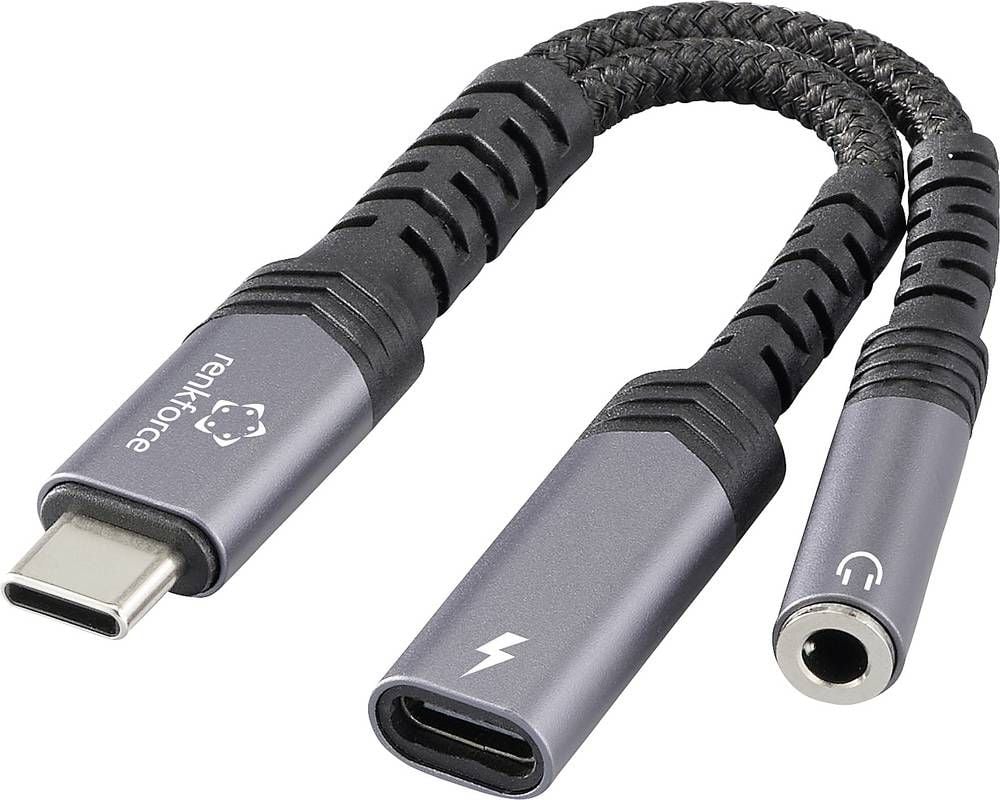
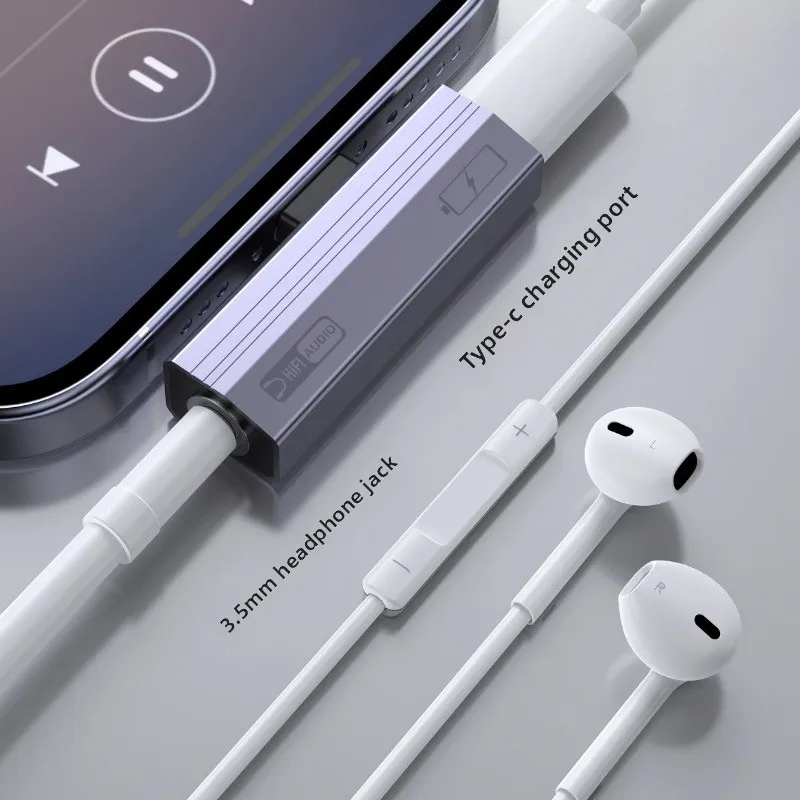
The headphone jack is inside USB-C connector. You can use USB-C-to-3.5mm passive (!) cable to connect your 3.5mm headphones, or you can buy 3.5mm headphones with USB-C audio connection.

There's no additional DAC involved, the analog audio is already on a USB-C pins.

mdp2021

3 hours ago

I absolutely concour about the need of a headphone jack - I do not buy anything without it. So,

> to fit other features in

what exactly, one would ask. If there are tradeoffs, if would be nice if the customers can decide what to have, in a modular product.

prmoustache

2 hours ago

At this point headphones with an usb-c connection have become nearly as common as 3.5mm trs ones. Additionally you can permamently hook a small usb-c dac with 3.5mm trs output to the headphones of your choice.

Only issue is some very cheap ones are actually bluetooth headphones in disguise where the usb-c connection only exist to power the bt recepter inside the headphone. I find this completely stupid.

neobrain

3 hours ago

> If there are tradeoffs, if would be nice if the customers can decide what to have, in a modular product.

A "modular product" has tradeoffs in and of itself (such as size, price, water resistance, …), which presumably would not fly for a majority of customers.

jqpabc123

4 hours ago

The new $650 Fairphone Gen 6+ is designed both for longevity and easy repairability.

I applaud the concept but to see how well this actually holds up in the real world, let's check the Fairphone web site.

Where are the parts to repair any version prior to Gen 6? I don't see them listed anywhere.

So it would appear that "longevity" is actually pretty limited.

thg

4 hours ago

Fairphone 4 (2021) parts: https://www.fairphone.com/shop/category/spare-parts-4?catego...

Fairphone 5 (2023) parts: https://www.fairphone.com/shop/category/spare-parts-4?catego...

Parts for the Fairphone 2 (2015) and Fairphone 3 (2019) aren't available anymore, but I suppose that's not all that surprising after 11 respective 7 years.

Afair, they started running out of some Fairphone 3 spare parts around 2024 and kept the ones they still had for warranty repairs. Source: I own one (and switched to the Fairphone 6 early this year).

jqpabc123

4 hours ago

Afair, they started running out of some Fairphone 3 spare parts around 2024

So "longevity" is actually about 5 years. Or less if you live in the USA.

https://us.fairphone.com/repairs

paimapi

3 hours ago

presumably longer if they were more popular and repair shops stock up on the parts. I assume most FP users are fairly tech savvy and would just purchase multiple components that are more likely to fail as a just-in-case (much like I do for bearings, headlights, and other small parts for my car)

encom

3 hours ago

That's 5 years longer than Apple.

rpdillon

4 hours ago

This is a good point. Ifixit has guides for all the phones, but it reports that none of the replacement parts are actually sold in the United States.

https://www.ifixit.com/Device/Fairphone

Reminds me of the cold steel throwing axe that I bought that specifically has replaceable handles in case you break one. No one actually sells the handles though!

Aachen

3 hours ago

Didn't they launch only their first device (considering this is the sixth generation) in the USA a few months ago? Hopefully the replacement parts are yet to come. I'm not sure why it's so difficult, perhaps it's that they're stretched too thin and barely managed to get the base device to market there at all

I bought one a few years ago. Good device, too big for my hands (back then, there were still smaller options so I bought one of those smaller ones in second-hand). Not having spare parts available would make me hesitate since that's like 50% of the point (fair sourcing being the other half), but besides that it's a (big) phone like any other

squishington

3 hours ago

I bought a fair phone 2 when I lived in Germany in 2016. Got a software update when I moved back to Australia. Bricked it. The kernel debug interface has no standard header, and required a fine pitch soldering iron header. I rented a German post box to send it to, as you need a European address for support. I tried to send it twice, and it was refused by German customs. I gave up and now I just buy cheap second hand Motorolas and unlock the bootloader, put lineageos on them. I think giving new life to discarded devices is more ethical anyway.

VileSquirrel

4 hours ago

It's in shop --> "all parts" (under the "spare parts" header)

Here are the ones for the fairphone 4: https://www.fairphone.com/shop/category/spare-parts-4?catego...

I however couldn't find the ones for the fairphone 3. The fairphone 4 is from 2021, which is not that old.

jqpabc123

4 hours ago

So "longevity" is actually about 5 years. Or less if you live in the USA.

colingauvin

4 hours ago

Early Fairphones were not necessarily designed for repairability. That is a principle that has emerged significantly in the last few iterations. The FP4 was the first that was really designed and marketed as fully modular from what I remember, and parts are still available.

For the American piece, the FP6 was the first available from OEM in the US.

hommelix

12 minutes ago

I still have various spare parts of my fp2: screen, camera, battery. This was in 2015 and it was modular and repairable. For the fp1, it was possible to replace the battery.

n_plus_1_acc

2 hours ago

The FP 3 was marketed as "you can replace the camera for a better one"

cge

3 hours ago

When I had a Fairphone 4, regulars on the community forum repeatedly reminded everyone that repairability was not a primary goal of Fairphone, ethical consumerism was, and any longevity and repairability was secondary or coincidental.

Yes, that goes against most of Fairphone's own advertising, but it was consistent with my experience of the phone and discussions on the forum: security updates frequently so far out of date that some software could not be run, flimsy components inconsistent with advertising (yes, the battery was nominally swappable, but the snaps on the back would break easily, and support would claim that it was not intended to be removed regularly), parts that were frequently out of stock, and of course, whole new phone designs every generation rather than Framework-like component upgrades.

It seems like they may have improved since then, but those problems, along with the atrocious security (FP4 used AOSP's public test signing keys, with publicly-available private keys, for its firmware) and sketchiness around specs, standards and openness (especially for the camera), generally turned me off the company.

declan_roberts

an hour ago

I love the phone, but I really hate the "ethical" framing of device repairability. This is an engineering problem and we don't need to twist it through a moral framework.

Phones that are repairable have superior engineering, not superior morality.

malicka

an hour ago

It’s both superior engineering-wise and morally. The moral framing is probably more popular with folks that don’t care about engineering superiority, too.