DeepSeek-v4-flash-vision-exp

322 pointsposted 6 hours ago
by dares2573

107 Comments

ciberado

5 hours ago

DS being unable to precisely view Playwright screenshots is the only thing I really miss from Sonnet. This is promising.

> Images are converted into tokens based on their dimensions, and these tokens are billed together with your text tokens.

> Before inference, every image is automatically resized:

> - Images with a total pixel count below roughly 384×384 are scaled up while preserving their aspect ratio.

> - Larger images are scaled down while preserving their aspect ratio so that the total pixel count after resizing is roughly that of an 800×800 image.

> As a result, there is an upper bound of 384 tokens per image: for example, a 2000×2000 image and a 5000×5000 image consume the same number of tokens after resizing. When a request contains multiple images, each image is counted independently under the same rule—there is no separate calculation for multi-image requests.

400 tokens per image results in 2,500 images per dollar, if I’m not mistaken.

edit: format.

knollimar

5 hours ago

Oof 800 by 800 kills a lot of use cases

johndough

5 hours ago

Might still be fine. The most recent crop of vLLMs proactively use whichever programs are available on the system (e.g. ImageMagick or PIL) to "zoom in" by cropping subimages if they can't quite make out the details.

knollimar

2 hours ago

Downsizing a higher res image to lower res means the zoom will be blurry.

adastra22

8 minutes ago

They’re not talking about zooming, hence the quotes.

andai

2 hours ago

They process the original image file with Python on the local device. (And I've seen the web chats do this with their "computer use" features too.)

The really wild one is even blind models will do this and they'll try to run stats on the pixels to figure out what it looks like... the even wilder thing is that it kind of works!

knollimar

40 minutes ago

If the API accepts only 800 by 800, the aegument youre making is "fix it in the harness".

I don't think the n by n subgrid fixes this the way most harnesses do, as it'll fail to count things if you have more overlap and fail relatiomships if you have less

wongarsu

5 hours ago

For most use cases you can fix that in the harness. Just give the model a tool to request a crop of specific coordinates of any image it has in its context. Call the tool "zoom" and it should be intuitive for the model

Maybe there are some use cases where you need high detail everywhere at once, but for OCR of small text and the like a zoom ability should be sufficient

embedding-shape

4 hours ago

For really dumb models I've also had success automatically cropping it into a grid of N images with the max size, then processing each cell individually, then once all been processed, do one final call with resized image + all other context previously generated per cell. Basically a workaround to the image dimension restrictions without loosing fidelity. Works well with even dumb 7B models.

Can't remember if I stole this idea from some existing public harness though, can't remember. If someone knows of public harnesses that do this already, please share them :)

dotancohen

3 hours ago

Does this not loose context? Especially e.g. in fonts where the character pairs 0O 1I 1l Il may be difficult to differentiate?

skeledrew

3 hours ago

That's what the grid crop should handle. The detail is retained at that level, and then everything is logically stitched together again using the lower-res-full-image as reference. That's going to be 2x token usage at minimum though.

shadyr

4 hours ago

It might also be due to its experimental status. Wouldn't surprise me if the GA version allows for larger input. Either that or the eventual pro version.

Chnmy

2 hours ago

what are these use cases?

knollimar

2 hours ago

Anything where there are symbols representing in space (e.g. schematics). Thats pretty broad

asdfsa32

5 hours ago

flash vs fine details. Pick one.

Doohickey-d

5 hours ago

Gemini "flash" models have an option for media resolution, including a high resolution option for screenshots.

leumon

2 hours ago

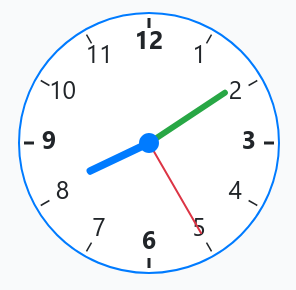
It fails the simple clock test for me which Qwen3.8 27B got (nearly) right. given an image of a clock https://files.catbox.moe/kgwa5e.png

I asked it "what time does the clock show?" (both on reasoning: high)

DS answered: The clock shows *5:10* (and 45 seconds). Here is the breakdown: * *Hour hand (red, shortest):* Pointing at the *5*. * *Minute hand (green, longest):* Pointing at the *2*, which represents 10 minutes. * *Second hand (blue, medium):* Pointing at the *9*, which represents 45 seconds.

Qwen answered: The clock shows *8:10* (with the red second hand on the 5, i.e. *8:10:25*).

- *Hour hand* (short, blue) → 8 - *Minute hand* (long, green) → 2 (10 minutes) - *Second hand* (thin, red) → 5 (25 seconds)

Correct answer is 08:09:25.

dghlsakjg

an hour ago

I’ll keep that in mind next time I need to tell what time it is by asking an llm to read an analog clock.

Snark aside, I’m not sure that these gotcha tests are any more useful than asking politicians gotcha questions. Sure, the model can’t tell me what time it is, but it can code the Wang algorithm for noisy audio matching in one shot. Maybe this is just me being an optimist, but this is my hiring philosophy and I guess maybe now my llm philosophy: I’m not interested in seeing how dumb I can make you look, I’m more interested in how smart you can be.

jubilanti

an hour ago

Reading any analog clock at any time level (edit: and a non-noisy vector rendered image at that) is absolutely table stakes for an allegedly frontier flagship vision model. As much as 1:1 OCR. If the model can't do that, there's something wrong. Doesn't matter if it's memorized some random thing you think is esoteric but is in all the training data and benchmarks.

The whole point of LLM/FMs vs good old fashioned ML is generalization to unknown domains, not just unknown tasks. The hunt for "gotchas" is the hunt for "not in your training data".

dghlsakjg

4 minutes ago

Is this an “alleged frontier flagship vision model”?

This is described as a brand new flash model - still experimental - from a lab that is a side project for an investment firm that has never had a vision model before. That doesn’t scream flagship or frontier to me.

atomicnumber3

an hour ago

It's because the messaging for what the point of these things is supposed to be is all over the place. Ask 10 different people and you'll get 10 different answers:

- A superintelligence that will usher in an age of human enlightenment

- A superintelligence that will usher in an age of human enslavement

- A really cool way to rake in trillion of rich VC/investor money by promising you're building a superintelligence that will usher in an age of human en[slave/lighten]ment

- A transformer model for predicting output tokens given a series of input tokens, informed primarily by reddit, stack overflow, and 6000 years of classical literature.

- A replacement for white collar labor. Start now or join the permanent underclass.

- A convenient fuzzy-find tool also capable of some probably-correct code generation.

- The ultimate customizable text RPG experience (you can pick if G stand for game or...)

And so on.

So, some people see a new model and check for how close humanity is to enslavement. Some people check to see if it got better at fixing broken unit tests.

KerrAvon

31 minutes ago

What's amazing is that all of these are true at once. If you allow for some significant slack in what "superintelligence" means.

altruios

an hour ago

Knowing where it fails is just as important as knowing where is excels.

mejutoco

an hour ago

It is like asking a politician how much a coffee costs, to show how disconnected they are from common people. Super intelligence not being able to read a simple analog clock does the same.

> Sure, the model can’t tell me what time it is, but it can code the Wang algorithm for noisy audio matching in one shot

This is about a _vision_ model.

vasco

an hour ago

It's still useful to find things it can't do if anything so we can tell when it starts being able to do them.

CooCooCaCha

an hour ago

Is being asked to read a clock really a gotcha?

dghlsakjg

an hour ago

If I had to hire an engineer and there was one that could one shot the wang algorithm, but couldn’t read an analog clock, I would have no problem hiring them.

Also worth noting that both models got it wrong. Qwen made a mistake that humans very good at reading clocks would make. Deepseek made a mistake that a human who had just learned to read clocks would make.

arjie

an hour ago

Not if you are aiming at a general intelligence but it’s worth considering that this is a tool that may not be able to count the number of strawberries in the letter R but can still center a div.

mkatx

34 minutes ago

I would say, try without thinking on. I find reasoning on any rag type request seems to increase hallucinations, probably due to the thinking tokens taking attention away from the, in this case, vision tokens.

I'd recommend non-thinking for any non-prompt input, and leave the thinking where it has to actually reason.

emosenkis

2 hours ago

This is not a normal looking clock - most clocks have either one color for all hands (second hand is thinnest and maybe also longest) or one color for hour/minute and one for second. I know that the hand lengths and thicknesses on this image are correct but for some reason I, a totally human person who grew up when analog clocks were still common, see this and think the hand on the 5 is the minute hand. How does the AI do if you just make all the hands black?

leumon

an hour ago

then deepseek answers: "The clock shows 8:25. The short hour hand is pointing to the 8, and the long minute hand is pointing to the 5, which represents 25 minutes."

and qwen still answers: "The clock shows *8:10* (with the second hand on the 5, i.e., 25 seconds). - *Hour hand* points to the 8 - *Minute hand* points to the 2 (= 10 minutes) - *Second hand* points to the 5 (= 25 seconds) So the time is *8:10:25*, or simply *8:10*."

dghlsakjg

an hour ago

Qwen still got the wrong answer, though.

Are we more forgiving because it’s the same type of mistake a human would make?

ttul

2 hours ago

A good share of humanity would have also gotten this question wrong!

mdp2021

2 hours ago

It's been four years that we are looping those

"The professional failed its task!" // "Laymen would have failed it too".

Which makes no sense.

andai

2 hours ago

Yeah, I heard most kids these days can't read analog clocks either.

I can't actually remember where I learned to read a clock, it might have actually been in school. I guess that means they don't teach it anymore. (Everyone's phone shows the time anyway...)

johnnyApplePRNG

an hour ago

I was wasting hours yesterday trying to get DeepSeek V4 Flash (with Qwen 3.8 27b as the vision agent, actually) to read sheet music to pass a Terminal Bench 3 benchmark and none of it was working... nothing... I changed models to gemma 31b, I tried OCR models... nothing could get it...

And then I realized, wait a second... you're testing the harness not only against a difficult benchmarking problem, but it's one you're literally never going to use the coding harness for either, lol. I don't write programs that read or interact with sheet music and I never will.

tl;dr Being frustrated that a "state of the art" vision model doesn't have perfect vision is a fools errand.

It can read and extract information from screenshots and PDFs just fine (my setup). No need to worry about edge cases.

ComputerGuru

2 hours ago

Gemini 3.7 Flash and 5.6-Sol (on all reasoning levels) also answer 8:10:25. The new "stealth" Ox Alpha also replies with the same. Opus 5 replies with 8:10 (no seconds). Not sure why this is so hard for them; Gemini is especially good at vision and I would have expected better from it.

segmondy

an hour ago

most likely a preview. they often release the preview via API, get more training data, post train some more then release the weight. i would expect to see it perform better in a few weeks or a month.

nubg

2 hours ago

welp, damning indictment. not sure if that means DS is super crap, or qwen is super good

wolttam

2 hours ago

Neither. Performance of all models is incredibly spikey.

LorenDB

5 hours ago

I've heard that DeepSeek v4 Flash 0731 has frequently assumed that it has vision capabilities and then resorts to inventing text-based image analysis tools when it finds that it actually can't see. In that case, this is a great upgrade for the model.

Anecdotally, I had to tell 0731 to refrain from viewing screenshots since it kept breaking its sessions by trying to read images.

VulgarExigency

4 hours ago

It tried to recreate vision by analyzing pixels on 3 separate projects I had it working on.

trollbridge

2 hours ago

I've mitigated this by giving it a "skill" that just means the harness using a different model.

mavamaarten

2 hours ago

Yeah I've seen it a lot. It goes through the effort, unasked, of pulling screenshots off a connected device and then it's like... Oh shit yeah I can't see.

johnnyApplePRNG

an hour ago

It's doing it's best to accomplish whatever task you've thrown at it.

It's expecting you to have done at least something besides select DS4 on Ollama, essentially.

RobertLong

33 minutes ago

The benchmark results look promising when compared to Opus 4.8, but for agentic usecases it's lacking images as tool call result types. Giving the model a tool to take screenshots and verify its work is my main usecase for vision models, but this is more oriented towards "build a website that looks like this" type prompts. Hopefully we'll see this by release.

BrucecarlL

5 hours ago

Congratulations! DeepSeek has finally gained eyes — the dark days are about to be behind us.

doublerabbit

3 hours ago

Or about to start. Depending on which life philosophy you desire to believe.

unified101

2 hours ago

Im intrigued. Please do share these philosophies.

zmmmmm

5 hours ago

> Larger images are scaled down while preserving their aspect ratio, so that the total pixel count after resizing is roughly that of an 800×800 image.

It's useful but for OCR and a lot of other applications it needs to be a bit higher (eg: putting in a full A4 / Letter sized page)

mkagenius

5 hours ago

Can split and feed?

throwaw12

5 hours ago

that's difficult as well, how do you k ow where to split?

kgwgk

4 hours ago

Text is often written as separate lines (and paragraphs) at least in some languages.

wongarsu

4 hours ago

Let the model do the splitting. A 800x800px image should be enough to make those decisions

grog454

4 hours ago

Overlap the splits?

vrganj

4 hours ago

Presumably a small cheap model could do that part?

jerkstate

2 hours ago

I just ran my image recognition benchmark on it ("is this XXX public landmark"?) and it misses a lot that bytedance seed 2.1 turbo gets right; for example: Asked "Is this Salisbury Cathedral" and supplied a picture of Wells Cathedral, it answers "Yes, the west facade of Salisbury Cathedral". Bytedance seed 2.1 turbo correctly says no. Similar results for a picture of Manhattan Bridge sent as Brooklyn Bridge, Chartres Cathedral sent as Notre Dame, etc. I have a benchmark of 12 such images and seed gets 11/12 and deepseek only gets 6/12.

throwa356262

11 minutes ago

This is a fairly small model for coding and agentic work.

Training it on images like yours would just make it worse in other areas.

ttul

2 hours ago

The DeepSWE benchmark they report (59.3%) overlaps with the confidence interval of 5.6-Sol Medium (61% +/- 2%), but likely at 1/18th the cost (they did not report the DeepSWE benchmark cost, but v4-flash had this cost ratio against Sol Medium).

Interestingly, v4-flash performed several points worse on DeepSWE at 53% +/- 4%. Assuming this result is verified by DeepSWE officially, it would mark a significant advance in Pareto cost/performance on software engineering tasks.

paytonjjones

2 hours ago

The closer comparison would be 5.6-Luna. On DeepSWE at Xhigh it's 57% at 1/6 the cost of Sol M, on Max it's 67% at 1/3rd the cost.

Still an advance, I just thought it worthy to note Sol isn't nearly as impressive on the cost/performance frontier as discounted Luna.

gozucito

5 hours ago

800x800 is 640,000 pixels, or 0.64 Megapixels. That is less than the resolution of computer screens from 1995, Super VGA which has around 0.79 MPs.

This is useful for a reasonable amount of use-cases, but I think the watershed rez will be around triple that, ~1080p, which is enough for almost anything, except small text and subtle details.

y4mi

7 minutes ago

really? i vividly remember the 800x600 screens from back in the day, defintely into the 2000s. pretty sure they only went away around ~05 or so

and games like the original diablo 2 only supported 640x480; going up to ... i think 800x600 with the xpac?

seriously, i think youre either a zoomer and didnt actually live through that time period or youre ... idk, having an episode? ^_~

barrkel

5 hours ago

You'd expect a tool-enabled model to leverage crop and zoom tools to inspect and validate what it thinks it's seeing, though.

dakolli

4 hours ago

I typically provide small screenshots to llms so this seems fine for that usecase, providing an entire screens context seems cause confusion with a lot of llms.

wiz21c

3 hours ago

Is there a way to test it online so that one doesn't have to resort to getting an API key and python code ?

v9v

5 hours ago

Interesting. Wasn't Deepseek's founder saying that they had explicitly decided not to focus on multimodal models at all and were going text-only because they believed it was enough to achieve AGI?

johndough

4 hours ago

It was explicitly said that they are pursuing multimodal support. A quote from the meeting transcript: https://github.com/demo-zexuan/liang-wenfeng-investor-meetin...

    Nevertheless, as a component, we will undoubtedly implement multimodal support — and we are already doing so. We plan to develop relevant models, ensuring that versions like V4 and subsequent iterations will natively support multimodal functionality.
Earlier, the following was said, which might match more what you had in mind.

    Achieving excellence in AI training does not require a global model or even multimodal approaches—by narrowing the scope of AI training and eliminating multimodality, certain tasks may remain unachievable without compromising the algorithm's validity.

    Multimodal approaches ultimately need to be implemented.
It is difficult to tell who said what, since the speaker ids are missing.

v9v

an hour ago

Thanks, I seem to have grossly misremembered what I read.

swiftcoder

3 hours ago

Worth noting that deepseek has had a separate vision-capable model for some time, which also powers their chat interface's vision mode

dakolli

4 hours ago

I think you're thinking of Dario saying this about image generation.

5kyn3t

4 hours ago

For what do you guys use vision in those models? surveillance is the obvious use case... but are there some "nicer" ways to use it?

ltrg

12 minutes ago

I use research agents to attribute methane emissions plumes detected by satellites to oil and gas infrastructure on the ground, using a pre-baked database of geospatial data and web research.

Had a tool that called out from DeepSeek to Gemini 3.5 Flash for viewing the spatial features in the context of high-resolution satellite imagery of each site, but will be trialling this model for the whole thing now.

deaux

4 hours ago

The obvious use case, especially on HN, is frontend dev of any kind at all. The second most obvious one is OCR of paper documents.

5kyn3t

4 hours ago

Frontend Dev? I do not really understand. do you let the models analyze the webpages you are working on? or for testing?

wongarsu

2 hours ago

LLMs are not great at aligning stuff on first try, they are however very good at taking screenshots and fixing their mistakes. Claude Design also does this all the time, as does regular Claude in the web UI if you tell it to make a powerpoint presentation

I really missed this feature when I had DeepSeek code a small game for fun. When writing UI and rendering code it could execute the game and get screenshots back, but then had to rely on my feedback on what had gone wrong. Models with vision can do much better here, finding more issues on their own

rpdillon

3 hours ago

Standard flow with a vision model in OMP is to write the front end code, fire up the server, fire up a headless browser and then take screenshots and examine and iterate. Works great. When I'm using DeepSeek V4 Flash, it always reminds me instead that I have to validate manually by loading up the page.

dandaka

3 hours ago

QA of course. You hook up your agent with CDP access to live product + let it screenshot and look into result. Also you could hook agent with CDP access to Figma to read/write, there a vision model is very useful as well.

deaux

3 hours ago

It closes the development loop. Without it a model can't check if the stuff it made actually visually renders like it's supposed to. It can only guess/assume.

dandaka

3 hours ago

but for OCR there are much better suited models, I use mlx-community/PaddleOCR-VL-8bit

deaux

3 hours ago

Sometimes you intentionally want to verbatim keep "mistakes", sometimes you don't and want them to be "fixed". OCR-only models tend to only do one of those two, in VLM cases often the latter. With multi-modal LLMs you can just tell them (adherence of course needing evals/differs per model).

zdragnar

an hour ago

https://stencil.so/blog/snapcompact - some agents (notably oh my pi, i forget which others) come with snapcompact as a primary means of compaction. Take the entire context, stick it in a small font in a PNG, and vision capable models can summarize and pull out the most useful information in many fewer vision tokens than the original context used.

I've not used it myself, but it's there.

hgoel

2 hours ago

Having vision is very handy for getting it to make plots/figures with matplotlib. A model with vision can be much more autonomous with catching visual glitches/misalignments and correcting itself.

Also used it for 3d printer control once, had it diagnosing issues, calibrating my Tradrack MMU and canceling failed prints autonomously from a couple of cameras placed around the printer.

trollbridge

2 hours ago

Allowing it to analyse a system under test (usually in an emulator, web browser, Electronic app container, etc. - something that can be reasonable captured).

It makes running much, much longer feedback loops possible. Although you can mix and match non-vision and vision models simply by invoking a vision model when you need one, as I like to use non-vision models like glm-5.3.

swiftcoder

3 hours ago

Any kind of spatial/graphical task is likely going to go better with a vision-capable model. Feed it a napkin-sketch of what your app should look like. Have it verify screenshots of the UI it just built. All of these one-shot-a-video-game evaluations that have suddenly become popular only work if the model can interpret screenshots...

kzrdude

2 hours ago

In the feedback loop when working on anything UI or graphical output related.

dandaka

3 hours ago

My product is connecting employers and workers with conversational agents. They love to communicate with images — CVs, documents, photos of worksites. Even CV-as-photo or offer-as-photo format is very popular. My daily driver Deepseek Flash can't see those photos. So I use image models to let agents understand the context.

moonu

3 hours ago

I've been working on an agentic graphic design tool, so vision is quite useful for having the model check its own work. I'm already seeing improvements with this model vs the text-only one.

wolttam

2 hours ago

No one’s mentioned robots, so… robots. VLA models, etc.

dcre

2 hours ago

Generating alt text for images in social media posts.

dudisubekti

3 hours ago

Going straight to surveillance and unable to think "nicer" ways... is strange.

1. process graphs and charts

2. process handwritten math formula, also chinese characters writings

3. process design sketch and wireframe

4. process scanned documents

... etc

in fact these transformer models currently suck for surveillance, too slow and expensive. There are already faster and better facial/gait/object recognition models out there.

dominotw

2 hours ago

when i am learning i draw what i undestand in a picture and ask ai to correct me. i want ai to watch over me while i am learning.

this is such good way to learn something for me.

Johnny_Bonk

2 hours ago

Was this the ox alpha model?

WiSaGaN

an hour ago

That would've been a very strange arrangement.

try-working

4 hours ago

I main V4 Pro at work now, and at home I route between Pro and Flash based on task. Switched to Opus 4.6 for some tasks at work because I needed image input - horrible. So nice to get image input with DS.

Edit: I see it has limited resolution. Luckily I just built a vision worker plugin for DSH that routes image input to Kimi K2.6 on Cloudflare.

dsrtslnd23

5 hours ago

will this be open weights?

dares2573

4 hours ago

I believe so. Openness has always been a consistent tradition of DeepSeek

moonu

4 hours ago

I imagine this is based on their 'Thinking with Visual Primitives' paper, and they had mentioned that the weights would be released for that