wxw
11 hours ago
Haven't heard of this company before. A good synopsis I dug up in their fundraising announcement:
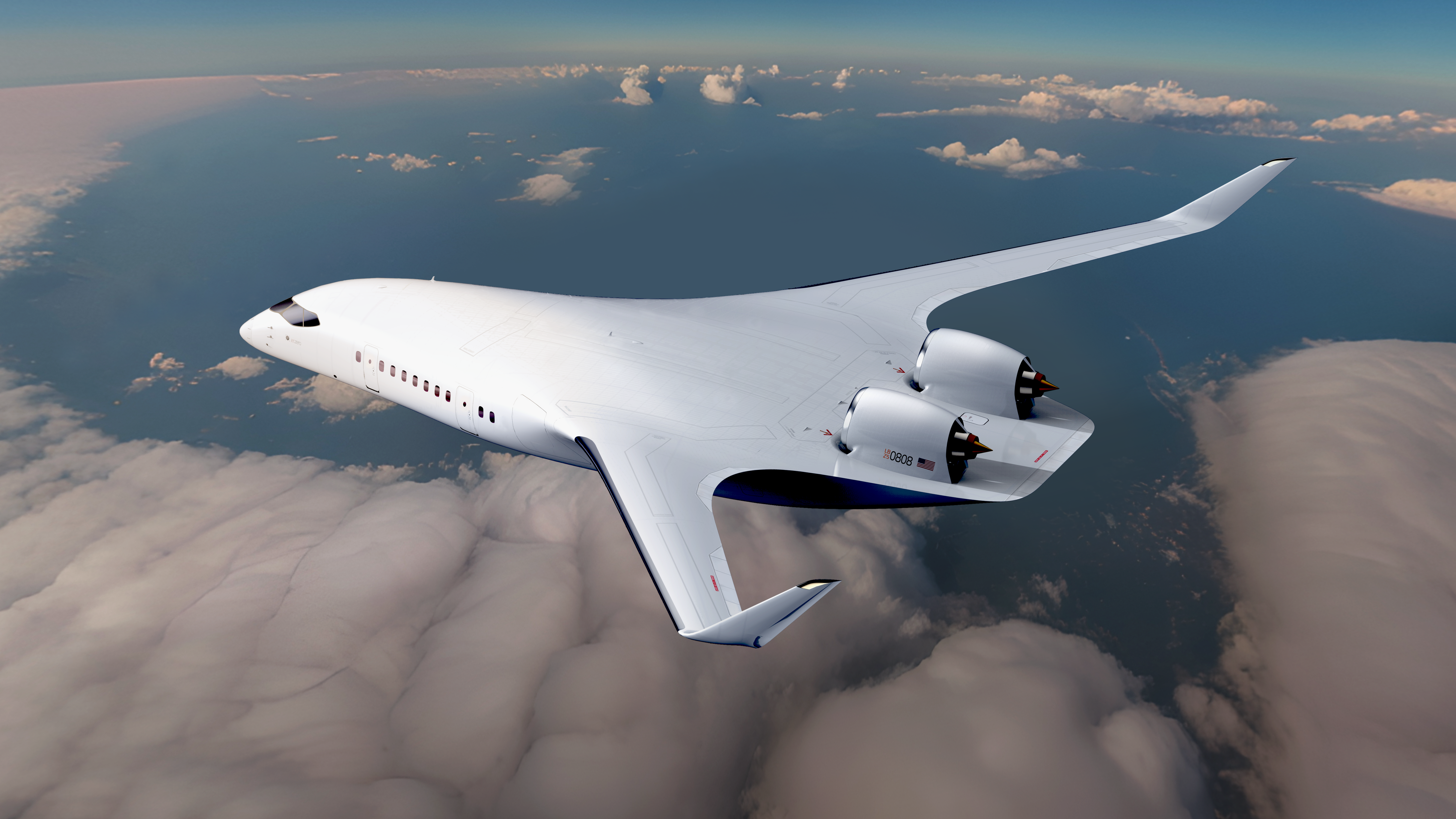
> JetZero, co-founded in 2020 by start-up veteran Tom O’Leary and aerospace legend Mark Page, is developing the world’s first commercial all-wing airplane. With up to 50% better fuel efficiency and lower carbon emissions compared to existing commercial airliners, JetZero's Z4 will offer the aviation industry a clear path to achieving its 2050 net-zero goals while also elevating the passenger experience. Working alongside the US Air Force, NASA, and the FAA, and backed by decades of investment and research into blended wing technology. JetZero looks to enter commercial service in the early 2030s.
Where an "all-wing" airplane is, kudos to Gemini,
> one that merges the main body and wings into a single lifting surface. This can reduce drag, lower fuel burn, and expand interior space.
gertrunde
3 hours ago
I think the more commonly used term is Blended Wing Body.
(https://en.wikipedia.org/wiki/Blended_wing_body)
(And actually, now I've just noticed they do use the term further down in the body of the text).
port11
2 hours ago
Dumb question but if the all-wing design has major advantages (and basically no negatives?), why haven't we been pursuing this for a long time?
You’re telling me that just recently a random startup thought they’d work on it? It’s not exactly startup territory…
ctippett
an hour ago
The design has been in the works since at least the late 1980s which is when the B-2 stealth bomber was developed.
For an all-wing design to work the onboard flight control system needs to make thousands of microscopic surface adjustments every second to keep the flight stable. This is much more practical with today's computing power and technology, even if the concept may have been thought of long ago.
Mentour Now! has a great video discussing the aerodynamics of the B-2 which has a lot of relevancy to the JetZero design. https://www.youtube.com/watch?v=BLtzjP1_3nQ
echelon
an hour ago
https://en.wikipedia.org/wiki/Blended_wing_body
No windows
Evacuation issues
Won't work in some airports
Nausea inducing
... It's not without issues.
notahacker
an hour ago
Yep. I'd say the way forward for testing is the freighter, which doesn't have evacuation issues, doesn't unload at passenger airbridges and (if packed properly) doesn't have the same sensitivity to rolling motions.
But freighters generally have lower utilization on less price-sensitive routes, so operators tend not to care so much about fuel economy (and for related reasons, usually aren't new aircraft). So however much easier the route to certification might be, it's a horrible market...
wiz21c
3 hours ago
"A clear path to zero": what a joke. It will be 25% less fuel, 75% SAF which are nowhere close (how will one grow enough without fertilizers ?), or worse, hydrogen which is even more nowhere close (how much energy you need to produce H2 ?).
just ditch the plane. That will be so much money you can invest in net-positive technologies.
conorcleary
3 hours ago
If the design is more efficient, then eventually the fuel you put into it can be replaced by your magic solution.
cassepipe
3 hours ago
Except there is another issue, how many people do you fit in this shape ? If you can only fly 30 people that's not very efficient as it would mean more flights.
Also I believe the further away you are from the rotation axis of the plane where it turns left or right, the more unpleasant your flight may be
phoghed
2 hours ago
The very comment thread we’re in has a quote stating you get more interior space because of the incorporation of wings into the body.
They appear to make more sense for large passenger jets because the interior volume scales better. There’s a ton of practical concerns though.
They won’t fit into existing airport setups. Seats near the wing will move waaay more than near the center during banking turns (maybe they’ll be cheaper lol)
I don’t think it’s a given they’ll replace what we’ve got, but who knows.
gertrunde
2 hours ago
Regarding capacity, iirc, one of the advantages of this style of body is greater internal volume.
And another company working in the same space, Natilus, is planning to fit 150-250 passengers on theirs, somewhat comparable capacity-wise to a 757, but about 30% smaller length/width.