lclc
8 hours ago
It's the basic 'flaw' of Democracy: Since the majority of the people are old, they will vote in the interest of old people. That's why the pension system will never be fixed.
roenxi
8 hours ago
Are we calling 40s old now? There are 2 countries where the median age is above 50 [0] and the US is 38.9. I suppose under 18s aren't in the voting pool but if a country has a median age of 50 they probably don't have that many under-18s running around. And old people don't vote as a totally unified a block, it'd be like saying countries are run for women because the median voter is a woman.
I'd suggest the main issue is that the world is so complicated that the younger voters just don't know what to organise and vote for. In the US in particular, they seem to basically be running an experiment every single election to try and figure out who they need to vote for to get some sane economic policy and stop getting involved in stupid wars. No success so far but you have to admire the process. The only people not getting the message are the people paid off to ignore it.
[0] https://en.wikipedia.org/wiki/List_of_countries_by_median_ag...
lclc
8 hours ago
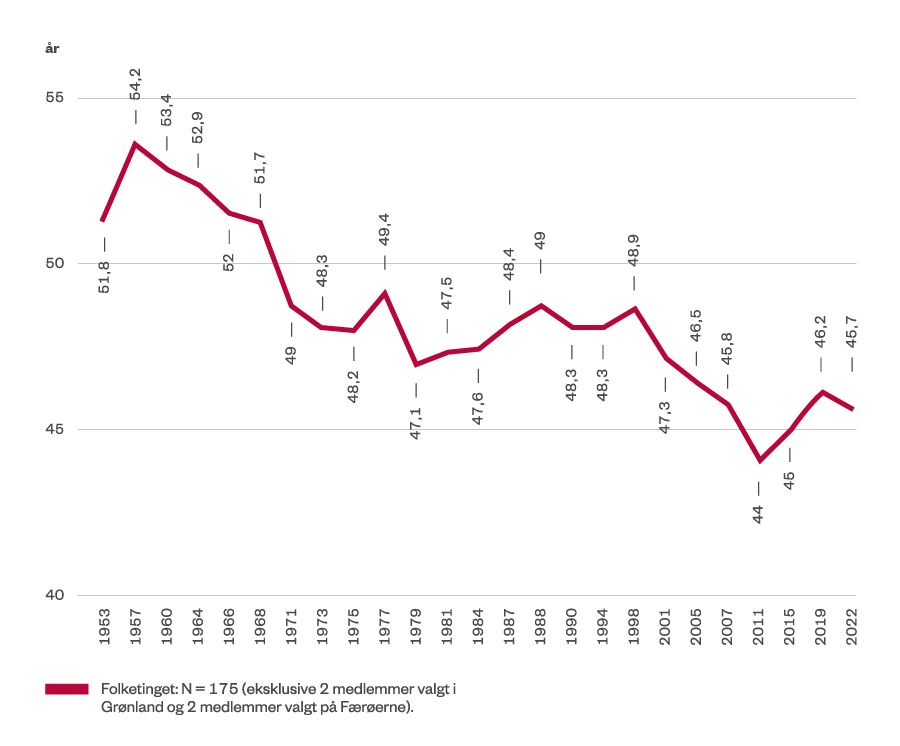
The median age of voters in the US is 50 years old (2019).
I think it's a fair assumption that majority of the 50 year old think about their retirement (meaning around 30 years into the future).
littlexsparkee
3 hours ago
Older people as a bloc vote at reliably high rate compared to middle aged or young cohort and are vocal about their interests - politicians see this and react/plan accordingly. That's why SS is called the third rail of politics.
zdragnar
8 hours ago
The majority of people being old is a relatively modern problem. One could even argue that it is a problem specific to cultures that favor low or negative birthrates.
lclc
8 hours ago
The list of countries with no low or negative birthrates is very short (mostly heavily underdeveloped countries). That's why the Gerontocracy applies nearly everywhere. I doubt it was favoured, but it's result is the shift of incentives from long term (young people) to short term (old people). Democracy fails here.
GrooveSAN
3 hours ago
Why would old people vote for other old _people_? I understand they’d want to get ideas favorable to them to be applied, but that may as well come from any _not old_ person.
littlexsparkee
3 hours ago
They tend to because typically people in the same stage of life tend to have similar interests to defend but like you say, it could theoretically come from politicians of any age. Younger cohorts are much more diverse and less likely to espouse these ideas, seeing them as extractive. This is where the stereotype of getting more conservative with age comes from - it's defensive wealth preservation.
lostmsu
2 hours ago
I think this is changed by the Internet in the same way as WWW forces globalization. In a generation or two when Internet-illiteral generation dies out we will have cross age homogenized.
Chu4eeno
7 hours ago
No cultures directly favor low or negative birthrates.
But we've known since the 1800s that it follows from female education (and this seems independent of culture, it was first observed in France, but you can see the same trend in any African country, or even Iran), which is favored.
hyhatqtv
7 hours ago
France went through a demographic transition 100+ years earlier than all other European countries and then had a population boom in the 50s and 60s. I doubt an average French women was less educated in 1960 than in the mid 1800s.
I don’t think it’s that straightforward, material conditions in combination with massively lower mortality in all age groups and a shift in social values must be playing a significant part
solumunus
2 hours ago
It’s simply that for the first time in human history women have alternative options that don’t suck. That’s literally it. Birth rates will remain high only in socially conservative highly religious countries. Liberal democracies? No chance.
hyhatqtv
an hour ago
It would be interesting to see to what extent exactly this is accurate (of course to a certain extent it is) if the majority of the population in liberal democracies had the option of having more than 1-2 children without massively compromising their material wellbeing (or the future of their offspring due to the lack of resources).
zdragnar
3 hours ago
China's (now defunct) one child policy begs to differ.
amunozo
8 hours ago
Low birthrates are a constant in every industrialized country independently of culture.
Balgair
3 hours ago
Aside: Do older populations vote for older candidates? Like, pick a house district, what is the average age there, does that correlate? I suppose you can do the same for states and senate candidates too. And I think we have good historical data too, so does it work going backwards?
If it does correlate to some 'strong' degree [0], then i think we could use it as a bit of a prediction going forward.
[0] It's population stuff so really anything above r>0.35 is good enough
MathMonkeyMan
8 hours ago
The median age in America is about 40, so depending on how you define old the majority could go one way or the other.
dvh
8 hours ago
0-18 contributes to median but are not allowed to vote