ThrowawayR2
3 days ago
> "...: It sounds like the key feature will be 'more': a faster CPU and faster IO, rather than new features."
Raspberry Pi Holdings is a embedded systems manufacturer for pity's sake; we don't need more from them, we need less. [EDIT] A faster Raspberry Pi 6 is encroaching on the territory of the Intel N150 and its successors and mainstream Linux distributions and that is a battle they would lose in terms of price and performance.
Give us a Raspberry Pi Zero 3W with proper sleep states to reduce sleep power consumption, lower idle power while awake, and 1 GB of RAM even if it doubles the price.
vablings
19 minutes ago
A refresh for a Pi Zero with real sleep. lower power consumption and moving away from GPIO would be awesome. Stuff like a dedicated i2c connector, PoE support and display over USB-C.
M5Stack and other esp32 based ecosystems rule the world for MCU so the Zero just need to be linux SOC with all the fancy bells and whistles with good driver support
Neywiny
3 days ago
^^^ when I tell people tangential to the field that the latest pi needs considerations of cooling solutions and a beefy power supply (no more just any old micro usb cable into any old usb port), they're astonished. It was a "microcontroller" you could program in Python with a friendly Linux environment and is now an expensive, power hungry, hot computer with a microcontroller hanging off of it
Aurornis
20 hours ago
I agree that Raspberry Pi is not a good general purpose computer, but some of these criticisms are starting to feel like a pile-on with partially incorrect information.
> the latest pi needs considerations of cooling solutions
FYI you can run the Raspberry Pi 5 without a fan or even a heatsink. It will safely throttle itself if it gets too hot.
If you're trying to get maximum performance out of it all the time, you will want a heatsink and fan. If you want to run some Python scripts in a Linux environment or even if you're doing heavy work and waiting longer is not a problem, you don't need extra cooling.
> and a beefy power supply (no more just any old micro usb cable into any old usb port)
This hasn't been true in 10 years.
Powering something off of any old USB port means it would have to fit within the 5V 500mA basic specification, which the Raspberry Pi 3 exceeded long ago.
> It was a "microcontroller" you could program in Python
It was never a microcontroller by any definition of the word.
Raspberry Pi foundation has released microcontrollers that run MicroPython in a very user-friendly format https://www.raspberrypi.com/documentation/microcontrollers/m...
ianburrell
12 hours ago
Raspberry Pi uses USB-C and USB-C is more generous with power. Almost everything except computers provides 15W. With USB-C, devices request want they and there is no reason has to work with minimum possible.
The problem with the Pi5 is that they use weird profile, 5A/5V, that requires special charger. Most 5V chargers are 100W and beefy. If they hadn't cheaped out on power circuits, they could have used normal 30W charger. They should come out with new version that fixes that.
wlesieutre
11 hours ago
That’s crazy, 5A/5V is not and has never been in range of the USB power delivery spec. It only goes to 5 amps at 20V for the 100W output, or higher voltages in the newer Extended Power Range topping out at 5A/48V.
5A/5V what are they smoking?
JimmyBiscuit
an hour ago
Probably the same stuff they smoked when they cheaped out on a resistor on the raspberry pi 4 and made it so chargers thought it was an audio device.
magicalhippo
7 hours ago
Keep in mind at least 2A of that is to power the four USB ports at their rated 500mA. So if you don't have four USB devices loading the USB ports at their max, you should be fine with 3A.
michaelt
18 hours ago
> Powering something off of any old USB port means it would have to fit within the 5V 500mA basic specification, which the Raspberry Pi 3 exceeded long ago.
Theoretically, devices like the iPhone have lower power consumption than that and loads of performance features like recording 4k 120fps video.
Of course, an iPhone costs much more than a RPi, and has much better economies of scale, so they’re not truly comparable.
Aurornis
18 hours ago
> Theoretically, devices like the iPhone have lower power consumption than that and loads of performance features like recording 4k 120fps video.
iPhones use cutting edge (expensive) manufacturing processes for their chips.
They also have batteries inside to cover the power demands while doing intense work like recording 4K 120fps video.
I don't understand what point you're trying to make. The Raspberry Pi is not in the same class of device as an iPhone.
kllrnohj
17 hours ago
An iPhone will absolutely draw more than 2.5w under load.
selectodude
14 hours ago
Yeah an iPhone 17 Pro can get over 15W if you’re really getting at it.
MisterTea
18 hours ago
> > It was a "microcontroller" you could program in Python
> It was never a microcontroller by any definition of the word.
I think the poster means people treat the R-Pi like an MCU that runs Python. The Arduino was popular at the time the Pi came out but limited. Once the Pi landed, it quickly filled the gap and the Arduino's popularity diminished to the point where it's now a corporate Pi clone.
hellweaver666
6 hours ago
Before we had the ESP32 type products that are now popular, using a Pi was often one of the only easy ways to make simple internet connected devices at home. I remember making smart lights and home sensors, speakers, clocks and all sorts of things using the Pi Zero W. It was cheap, small and easy to get up and running.
I and many other people very much used it like a microcontroller.
mschuster91
14 hours ago
> Powering something off of any old USB port means it would have to fit within the 5V 500mA basic specification, which the Raspberry Pi 3 exceeded long ago.
In practice most USB wall warts will happily provide 2 amps or even more with no overcurrent protection at all. The 500 mA limitation, at least outside of ports on computers (where you'll maybe get a prompt on Windows and macOS), is theoretical.
robocat
5 hours ago
Irrelevant...
They need to stick within limits to avoid liability (and avoid arseholes blaming them on forums).
Someone would get a problem with their computer or TV, and then blame Raspberry Pi (or create a problem).
margalabargala
19 hours ago
> FYI you can run the Raspberry Pi 5 without a fan or even a heatsink. It will safely throttle itself if it gets too hot.
What's the point of doing so though? If you're doing this, you're obviously using the wrong device. If all you need is to run some python scripts in a Linux environment, you should use a Pi 3 or Pi 0w2.
Agree with your other points.
cillian64
19 hours ago
Even for extended workloads, a Pi 5 without a heatsink is still a hell of a lot faster than a Pi 4. And as sibling says, most users appreciate bursty speed while not doing prelonged compute (see also fanless laptops).
(Disclaimer, I work for raspberry pi ltd, not views of employer etc.)
Aurornis
19 hours ago
Having the burst performance is helpful.
Most light workloads are very bursty. When you type a command or click on something you want latency to be low. Having the overhead to get it done quickly at the full clockspeed is good if you are latency sensitive.
Throttling has become a bad word. Some feel compelled to avoid it at all costs, doing things like buying big coolers and running synthetic benchmarks to avoid it. Unless you're doing sustained workloads where you need all of the performance, allowing a little throttling is fine.
flyinghamster
18 hours ago
I've been doing some heavy SDR lifting with a couple of my Pi 5s, and my own experience is that the active cooler works extremely well, and more often than not the fan can be shut off and it will work well as a passive cooler.
margalabargala
18 hours ago
If you're consistently doing bursty loads that throttle, the thermal cycles are going to do some damage to your chip and it'll fail sooner than if you ran it cooler.
brucehoult
13 hours ago
Yeah, in 20 years instead of 100 years.
I'm going to replace it before then.
ssl-3
13 hours ago
So that means what, exactly?
Do heat cycles mean that the device only lasts half as long as it might if it were kept at some constant ideal temperature? A third as long?
If so, then...so what? The tinkerers using these things aren't broadly concerned about these things. We're all out here running our real-live desktop, laptop, and pocket computers with bursty loads, dynamic clocks, and dynamic heat anyway, and these things are generally doing just fine. We aren't driving space ships with this stuff; it'll be alright.
I insist that there is no merit to holding a lowly Raspberry Pi board to a higher standard than we hold everything else.
Furthermore: If perfection is necessary for some kind of application, then maybe starting with a <$100 hobby SBC isn't the best move. It might be time to look within for a better pathway.
giobox
20 hours ago
> It was a "microcontroller" you could program in Python with a friendly Linux environment and is now an expensive, power hungry, hot computer with a microcontroller hanging off of it
The Pi project was never originally a microcontroller - it was always a full-blown SBC you could program any way you want with some GPIO pins attached. People literally used them as (slow) home computers.
The company didn't sell its first microcontroller until years later in 2021 with the Pico, by which point we already had Pi 4. I do though think its a real shame prices for the SBCs have risen as they have.
Rebelgecko
18 hours ago
At one point, the raspberry pi was a decent option if you wanted something hobbyist friendly that could toggle GPIOs and connect to the Internet (and later Bluetooth).
I suspect Espressif has mostly taken over that market now
ozim
18 hours ago
Yeah every "hardware hacker" I know has pile of ESP32 at home now instead of pile of raspberry pi's.
flyinghamster
12 minutes ago
I have yet to even get started with ESP32, mainly because software-defined radio is my main use case. Once you start getting into absurdly high sampling rates, you start to need a lot of horsepower, and that's where the more powerful SBCs shine.
As an example, one of my Pi 5s takes an Airspy and an RTL, extracts 11 different FM broadcast stations, then encodes each audio stream and sends all of them to an Icecast server. There's processing power for more stations, but there are none I'm interested in among the others I'm streaming. With the current 11, it's using about 75% of CPU resources with no overclock. (Edit: this is a 2GB model, and it's running in roughly 500 MB.)
Gigachad
13 hours ago
The pi, particularly the pi zero is still useful if you need something that can run normal software but not a full mini pc. One example I've seen is using a Pi zero as a "wireless usb" where you can plug it in to a machine that accepts files over usb, and can now drop files on to it over the network.
Maybe you could do this with a ESP32 but it's easy on linux where you can use all the normal tooling and filesystem drivers.
pjmlp
8 hours ago
ESP32 can run FreeRTOS, and I think people nowadays have no idea how much stuff we could do in MS-DOS PCs even with all their limitations for the epoch.
ESP32 hardware is much better than they used to be.
Not everything needs to be under Linux monoculture, thankfully.
bmitc
12 hours ago
The Pi Pico is exactly that.
wrxd
20 hours ago
It's still true that people, out of convenience and familiarity, used Raspberry Pi for tasks where a microcontrollers would have been perfectly adequate
giobox
20 hours ago
There was definitely usecase overlap due to the presence of the GPIO, but huge numbers of Pis ended up doing things a microcontroller can't - stuff like the PiHole and Retropie projects, and never used their GPIO pins at all.
Thinking of any of the early Pis as microcontrollers ignores a huge amount of the ways in which actual end users interacted with the thing, and even the way it was sold and marketed. Upton was trying to replace early hacker-friendly home computers like the BBC Micro/Apple II, for a new generation.
bcjdjsndon
5 hours ago
> but huge numbers of Pis ended up doing things a microcontroller can't
Mate you know full well it was multiple things... Marketed to education as an actual computer, to the maker demographic as a microcontroller, as a way to learn coding but also robotics etc
>Thinking of any of the early Pis as microcontrollers ignores blah blah blah
Same applies to thinking of them as SBCs
myself248
18 hours ago
This just clarified something for me. I've always been annoyed when I see a Pi with nothing connected to its GPIO header; why not just use a cheap thin client? Or an old laptop, for that matter? But that's missing the point. Here's the point:
Pre-Beagleboard-and-Pi, if you wanted an programmable thing to work with GPIO, you used an Arduino or a BASIC Stamp, or just a plain old PIC. But they wouldn't run a real OS.
Pre-Beagleboard-and-Pi, if you wanted an embedded Linux box, you used a WRT54G or a Soekris or an old laptop. But getting GPIO out of them was a PITA. (And often involved lashing an Arduino to the side.)
The Beagleboard (released in 2008), could finally do both. It had gobs of I/O and first-class support for it under Linux. It was pretty affordable. Then the Raspberry Pi came out in 2012, with a similar amount of GPIO, but demolished the price point to where it made sense to use it in place of a microcontroller.
That's really the magic of the Pi. You can keep one cheap gizmo around, and use it to solve (a large fraction of) two classes of problems. It doesn't fully replace everything a PIC or a PC can do, but it replaces an awful, awful lot of them.
everforward
17 hours ago
> I've always been annoyed when I see a Pi with nothing connected to its GPIO header; why not just use a cheap thin client?
There have also been times when Pi's were cheap enough and x86 idled so power-inefficiently that you'd save money over a reasonable time horizon if you couldn't run your old laptops at full throttle.
Absurdly extreme example, but at one point I decided to replace a couple (maybe 3) RPi's with a single old Dell rack server off Ebay plus replaced my router with one running pfsense. I knew it would be mostly idle, that thing had 2 Xeon processors to replace 3 cheap ARM processors.
Between the 2 rack servers, my power bill went up by enough to buy a new Pi or two every month. It was like $80/month extra in power bills.
michaelt
18 hours ago
Then the esp8266 came along, offering wifi and gpios and an arduino-like programming experience at a price point of literally $1
myself248
16 hours ago
And the ESP32 is offering CPU power on par with many of the embedded-x86 SOCs that powered some of the early wifi routers...
ssl-3
13 hours ago
A $2 Chinese ESP32 dev board is more stout in many ways than the first Pentium machine I had, which sure did feel fast-enough to run the whole world with at that time. :)
In this amazing world full of such inexpensive choices, it seems so bizarre to me to demonize any of them. They're all excellent in some way, and it's OK that there's more than one.
This isn't football, handball, American politics, or Highlander: There can be more than one. It's OK.
pjmlp
8 hours ago
This is what I keep repeating in many threads about ESP32, the little thing is actually quite powerful, especially for those of us that experienced MS-DOS PCs.
scottlamb
21 hours ago
On the other hand, the RP2350 actually is a microcontroller, and IMO a nice one for many purposes. PIO, high-quality datasheet, nice ecosystem, etc. And the Pi Zero 2(W) can do most things the Pi/Pi 2 could, with a smaller footprint and less power consumption. Variety is nice.
teaearlgraycold
18 hours ago
Something can't be a microcontroller if it runs Linux.
monocasa
12 hours ago
I wouldn't quite go that far. Linux runs on nommu systems. With some psram you should be able to get a version to run on at least the rp2350 using the riscv cores with relatively minimal fuss.
Is that a good idea? Well, not really.
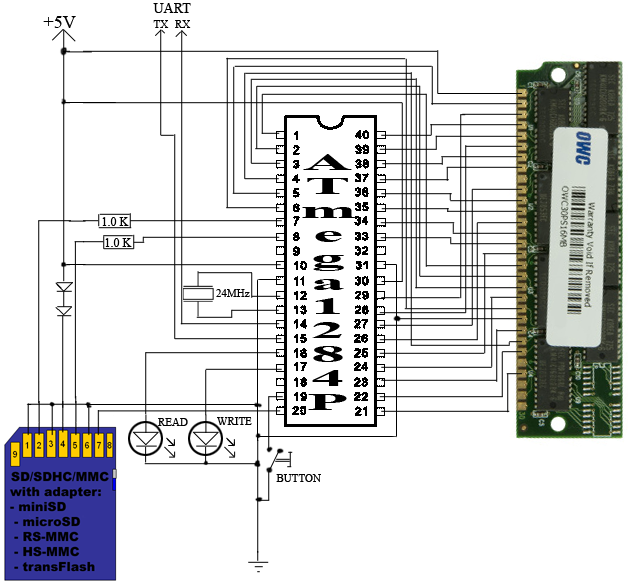
Lerc
11 hours ago
You can run Linux on this
daemin
12 hours ago
Bare metal or bare bootloader only right?
pjmlp
8 hours ago
Or stuff like FreeRTOS, NuttX, Zephyr, and co.
newswasboring
5 hours ago
Personally I have never seen Raspberry Pi as anything but a small personal computer. I've maintained a home server which get upgraded as Pi's upgrade. It runs well and manages my media, files and now running hermes agent. I remember even the first time it was introduced to me was with look it runs linux and you can probably run VLC on it.
tetris11
21 hours ago
Performance per Watt still outranks any other (quasi-)mainline linux device
ch_123
21 hours ago
Do you have a reference for this? Looking around, I see it being beaten by other ARM SBCs, and even low end Intel devices.
Many years ago, I measured performance per watt of the original Raspberry Pi when they were still relatively new. The performance per watt lagged behind even a beefy Intel box since the original Raspi was so slow that it destroyed any gain it got from using so little power.
EDIT: One set of benchmarks I found as an example: https://bret.dk/raspberry-pi-5-review/#Performance-Per-Watt
ssl-3
21 hours ago
They've never been particularly low-power, in a performance-per-Watt sort of way compared to other offerings at whatever present day. In recent times, I've seen completely-believable reports that N150 boxes walk all over it.
They've never been particularly cheap, in a performance-per-dollar sort of way. Used machines from eBay, yard sales, and old broken laptops (that still compute!) have always been better. (They usually come out OK when new is compared to new, though, which is IMHO the only valid comparison.)
Those comparisons were never very favorable.
---
The parts where it shines are: Small; they come in two sizes, and those sizes are small and smaller. That was new, but it's been cloned all over the place.
Built-in GPIO that's meant for people to actually-use and tinker with. That was new, too, but it's also been cloned. (Also: These days, anyone can plug a cheap Pi Pico into any PC with USB and get a fairly intense amount of GPIO to goof with.)
Standardization, and the appliance-like behavior this can enable. Lots of folks, including kids of all ages, just download pre-built images and swap SD cards like they would cartridges in a Nintendo. That's not for me, but it's pretty neat.
Community. They've still got a lot of momentum by being first at these roles. That's good. It helps newbs (who at this point may have never had anything resembling a "real computer" to play with ever before in their lives) to get started.
Low-power enough: It's not ideal when chasing tiny Watts for battery or small solar power, but you probably won't notice it on an electric bill (and despite the bizarro-world cooling rigs people put together, a passive heatsink really is good enough to keep it running in-spec).
sitzkrieg
21 hours ago
raspberry pi has terrible power management as well. turning off a core was impossible on previous generations for example. a few years ago rpi was the worst of all sbcs we measured for battery powered usages. this was for an actual embedded product so it wasn’t going to be used either way (ask broadcom for some chips HAHA)
but there is very little reason to use a rpi over other sbcs if you have a remote idea what you’re doing beyond hobby use
dangus
19 hours ago
Performance per watt is nice but I’d be more inclined to talk about “problems being solved per dollar.”
If you don’t specifically have a project where you need the GPIO pins built in, I struggle to understand the use case proposition of a raspberry pi compared to a typical x86 mini PC or even just grabbing a think client desktop like a ThinkCentre.
Almost everything that is unique to a Pi compared to an x86 mini PC seems like it makes more sense with an ESP device.
When the Raspberry Pi was $35 and it ran a desktop OS and the cheapest alternative that did that was 5x the price that use case made sense.
ssl-3
21 hours ago
They'll do whatever they do.
Maybe a tick-tock release cycle (one with new features and some speed, the next with the ~same features and more speed) is where they're headed, and maybe that makes sense. They wouldn't be the first.
I'd love to see even-lower-RAM versions, though. Most of what I use Raspberry Pis for at home for is not RAM-hungry at all.
My Pi4 network router has 2GB because that was the smallest/cheapest version at release when I got it, but the system itself consistently only uses about 64MB of RAM. It'd do perfectly well and have a ton of breathing room with just 128MB of RAM (which will never happen, but if it did happen...).
I suspect the Pi4 that I use as a set-top box with Kodi would be fine with 512MB.
I've used Zero Ws for all kinds of things over the years and never felt RAM-starved with their little 512MB of RAM.
So I'm learning towards 512MB.
But sure: 1GB options would also be fine even if it does double the price. Our comments serve to demonstrate that there's room in the marketplace for different SKUs with different memory capacities. :)
ChrisRR
3 hours ago
We need a 5 lite. The specs of the 5 without the massive power draw and heat generation
moffkalast
2 hours ago
At least now they literally cannot pull more power over USB 5V, because they maxed out the spec. It's even slightly beyond it.
wmf
18 hours ago
Ideally each RPi generation should keep the same price (or lower now that it's gotten so high) but with better performance. If they can't do that they just shouldn't create a new generation.
vardump
18 hours ago
Sure (inflation adjusted), but I see no harm if they also provide higher specced SBCs.
platevoltage
10 hours ago
I don't think the Raspberry PI foundation has the buying power to control RAM prices.
wmf
10 hours ago
The price was creeping up long before the DRAM shortage. They're totally doomed now.
perarneng
7 hours ago
> Raspberry Pi Zero 3W with proper sleep states to reduce sleep power consumption, lower idle power while awake, and 1 GB of RAM even if it doubles the price.
Yes, that would be kind of a dream device, perhaps also if it could suspend the os when asleep so it doesn't have to boot every time but I guess that might the standard way of doing it.
thisisabore
7 hours ago
I'd be interested in seeing them partner with some of the other interesting and open-ish players, like Pine64 or Radxa, to push for a more standardised, unified SBC landscape.
But that's not as good for PR as "bigger, faster, better" even if that comes with the problems you mentioned.
canpan
15 hours ago
I wonder how they are positioned now in the market.
During covid I wanted a small low power always on server. I thought about Raspi, but at the time it was expensive and I went with an intel nuc, for a similar price.
Now if I wanted to do hobby electronics, I heard I should look into esp32 or stm32..
hn_throw2025
3 hours ago
I use a Pi 4B as a 24/7 home server in a country where domestic electricity is expensive (and worsening).
Each Pi release is more powerful, but uses more energy. I found the Pi 4B to be the sweet spot for me, because it is the earliest model to support USB booting, gigabit Ethernet, and offer > 1GB RAM.
Perhaps a used one would fit your purposes and budget?
I currently use it to run PiHole, serve media via SMB, host Postgres & Redis, and run some custom written Dockerized apps. Home Assistant to possibly follow, too. The current load seems reasonable in htop, but I haven’t looked into burst scenarios.
virgil_disgr4ce
14 hours ago
Well... "hobby electronics" is extraordinarily broad :)
It depends massively on what kind of DX you want. If you want to work with a 'regular' operating system, you're looking more in the RPi direction.
If you want to write straight-up C firmware, then yeah, the esp and stms are both great.
platevoltage
10 hours ago
The things that keeps stopping me from using one for my server is the IO. the PCIe lane on the Pi 5 was a great addition, but it isn't quite sufficient.
wolpoli
19 hours ago
Raspberry Pi isn't in direct competition with N150's.
Their niche is the industrial/embedded space. For that market, power consumption doesn't matter. What matters is that each model is guaranteed to be available till a specific date.
swiftcoder
19 hours ago
> Raspberry Pi isn't in direct competition with N150's.
They may not have intended to be in direct competition, but in the current crisis conditions they are priced about the same as equivalent RAM/storage N150s, have even worse supply issues than the N150s, and have worse performance/watt than the N150s.
Its mighty hard to recommend them for new projects at the moment (nor any of the Pi clones, which are also rocketing in cost and dwindling in availability)
michaelt
17 hours ago
Among the people making things like a DIY NAS, who want fast USB, lots of cores and RAM, small-ish, not-too-bad power consumption, running Linux; and not caring much about GPIOs or passive cooling, it’s in competition with the N150
Among people who want GPIOs and network connectivity, a low price and an open, microcontroller like experience, not caring much about USB speeds and lots of cores and running Linux and suchlike, it’s in competition with the esp8266 & esp32. And the previous generations of RPi.
wolpoli
13 hours ago
The Pi SBCs are squeezed in between the SFFs and the microcontrollers for many use cases. It's only a good fit if there is a need for the GPIOs/Linux/Display. For anything else, there are better products out there.
pjmlp
8 hours ago
It is for those of us that rather play around with an ARM CPU, and first class Linux support.
leidenfrost
17 hours ago
IMHO people expected a Pi that offered similar performance as a Mac M1 but with Linux as first class citizen
monocasa
12 hours ago
I mean, they're still on some ancient node like 28nm last time I checked.
throwaway27448
21 hours ago
I think exactly the opposite: we have no shortage of embedded crap we can buy; what is useful is dismembering intel. It would be better if the pi were risc v but this will do for now.
hedora
18 hours ago
Is there some serious astroturfing going on with the N100/N150, or am I just jaded?
I have a bunch of old intel atom boards laying around. The Intel Compute Stick (TM) burnt out its flash root drive in a few months. The C2000 board I had burnt out the clock pin to drive the bios. I have a Clover Trail with a PowerVR GPU (I thought I was getting an intel GPU because it was branded Intel Graphics or similar, but nope!) that lost Windows support very quickly after launch, and has no GPU drivers for any other OS.
Instead of being fooled 4 times in a row, I looked into using an N150 for a NAS, but this time I held off a bit until after launch so I could research it first.
Lo-and-behold, they all have crazy PCIe / memory subsystem data corruption issues. I guess there are some chicken bits for the OS developers to set if the kernel can stay up long enough after boot without a panic.
Why would anyone buy this for a NAS / embedded use case?
tredre3
18 hours ago
> I looked into using an N150 for a NAS [...] Lo-and-behold, they all have crazy PCIe / memory subsystem data corruption issues.
Source? I've never had a single problem with PCIE on N100/N150/N200.
I have had a ton of issues with drive corruption on the pi, both via USB3 and PCIE.
hedora
18 hours ago
adrian_b
17 hours ago
All CPUs from all vendors have tons of bugs like this, which are mitigated in the operating system kernels, e.g. in the Linux kernel.
I am pretty certain that the Linux kernel must also contain specific code for various quirks of all Arm CPUs that have been used in the various Raspberry Pi models.
Intel had indeed several bugs that were more ugly than usual in their recent CPU models, like also MONITOR not working correctly in Lunar Lake, but even so, Intel still has better documentation for their CPU bugs than most vendors of Arm-based CPUs.
In any case, the bug that you linked was solved in the kernel years ago and it affects a privileged instruction that cannot be used in user programs. It does not have any direct relationship with memory and PCIe corruption. Memory corruption can occur inside the operating kernel only in certain circumstances, when the kernel changes the mapping of global memory pages and then writes the new pages, but the writes go to the old pages. However, this could happen only until 3 years ago, before the bug was known.
kllrnohj
17 hours ago
so a single 3 year old errata for the n100 that was long since patched?
utternerd
18 hours ago
I've been running an N100 for 3 years with a 5 bay external enclosure over USB 3.2 Gen 2 and ZFS, and have not had any issues. It is pretty phenomenal, pulls about the same power, and costs around the same as an RPi 5 but provides substantially more compute and throughput.
moffkalast
19 hours ago
A Raspberry Pi with sleep and hibernation is like asking Valve to make Half Life 3. They just can't. It doesn't compute.
vachina
8 hours ago
The entire raspi foundation is a marketing department. Raspi products is making zero sense ever since the Pi 2.
> encroaching on the territory of the Intel N150.
It’s nerdier to say you built your homelab on a Raspi, and that’s what keeps the foundation afloat.