_august
16 hours ago
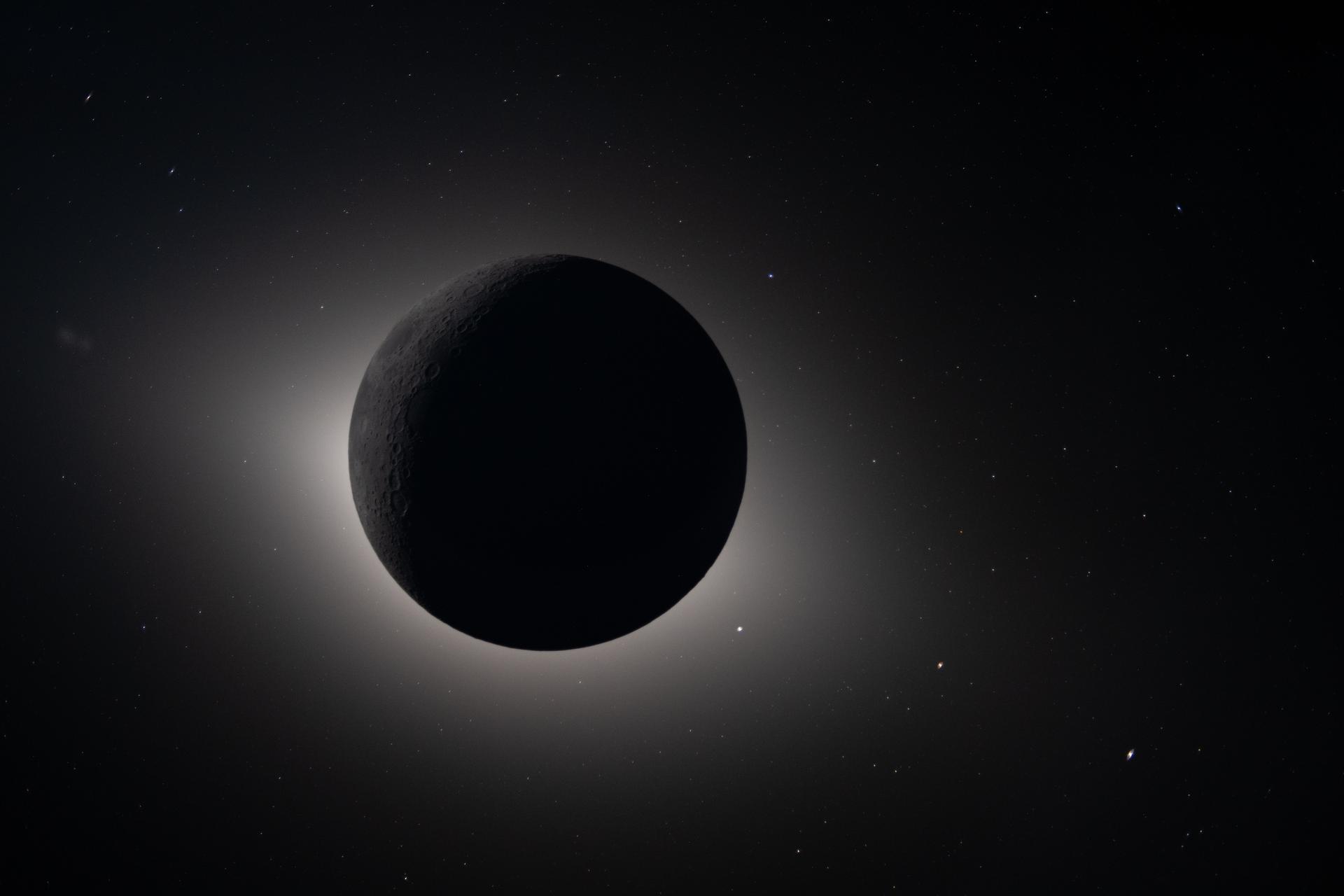
Are full size/larger images available somewhere? 1920x1280px seems low.
Edit: Found 'em: https://images.nasa.gov/search?page=1&media=image&yearStart=...
ChrisMarshallNY
12 hours ago
Try this: https://www.flickr.com/photos/nasa2explore/
I don’t see TIFFs, so I assume the originals were JPEG.
cguess
an hour ago
If anything the originals would be RAW files.
ChrisMarshallNY
an hour ago
Maybe they were RAW + JPEG. That's fairly common.
Could be, we see TIFFs, after they get back.
foobarbecue
32 minutes ago
Should eventually be on pds atlas I hope. https://pds-imaging.jpl.nasa.gov/
dylan604
14 hours ago
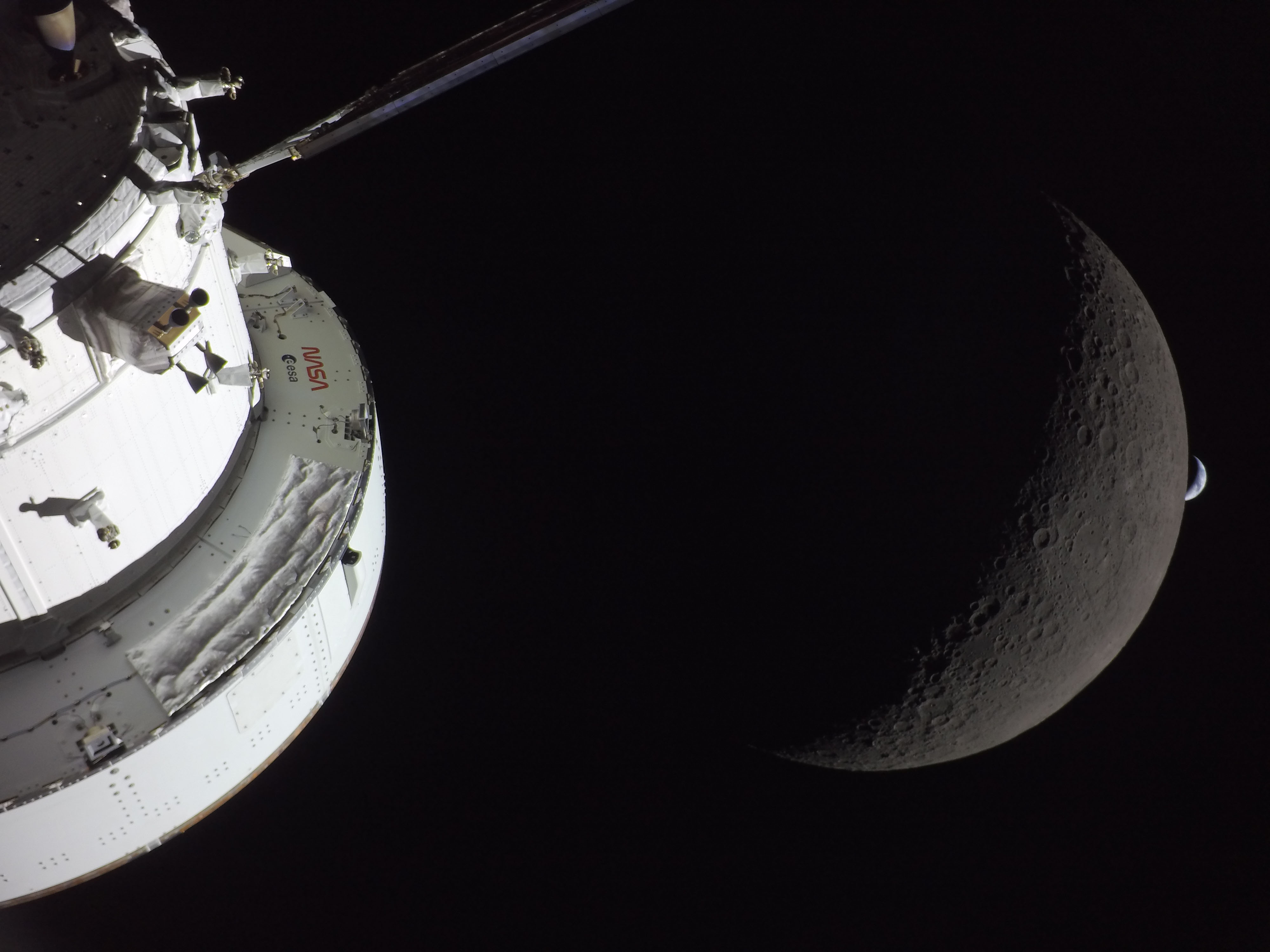
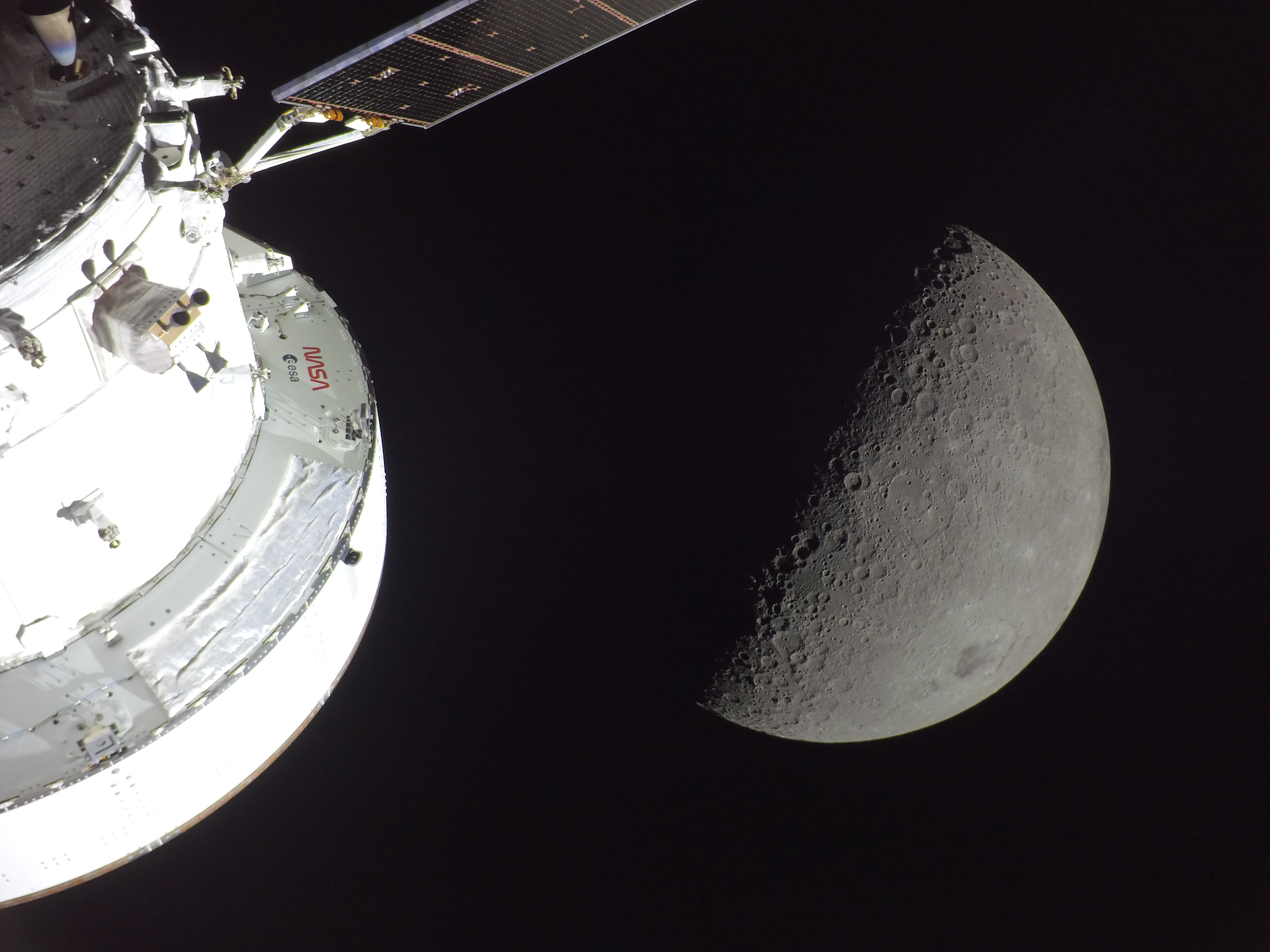
The external shots seem to just be from the GoPro strapped to a solar panel. Didn't seen anything that looked like the shots from the Nikons onboard. Was hoping for a couple, but I know I'm just being greedy wanting all the pics
edit: exif data shows some are from a Nikon. I just want to see them all!!! My greedy line still plays
niek_pas
7 hours ago
Maybe you’re being impatient, but I don’t think you’re being greedy. This is a publicly funded project. I’d say those photos belong in the public domain. Which they are.
tharkun__
9 hours ago
Hah! Funny how everyone here seems to be thinking the same: They said something about "finally 4k moon rocket images" and the stuff we got in the news was like blurry 800x600 type with lots of JPEG artifacts and such.
Even the smallest resolution images I see in the link that the parent edited into their comment have better quality than what news outlets posted.
I want TIFFs that takes ages to download and I need to scroll around in/zoom out on!
dylan604
9 hours ago
They will be posted when they get them. Right now, NASA doesn't have them because they're still on the SD cards in the capsule (probably been copied to their PCDs too). There's not a lot of bandwidth to be pushing large RAW files. They have to share the bandwidth with all of the telemetry and comms. They sent some small files down just to make some PR announcements and tease what will be coming.
adrianpike
8 hours ago
There's supposed to be a 260 megabit link: https://www.nasa.gov/goddard/esc/o2o/
Maybe it's not operating as described yet?
adrian_b
6 hours ago
It is operating only when it can be pointed towards Earth, while also avoiding the Sun, which did not happen during the flyby.
The laser is on one side of Orion, and when that side is not oriented towards Earth for various reasons, the optical communications cannot be used.
For continuous communications, at least when there is no interposed body, like the Moon, multiple lasers located around Orion would be needed to ensure coverage. When by the far side of the Moon, a relay orbiting around the Moon would be needed.
consp
7 hours ago
Doesn't that require line of sight with limited receivers available? Maybe the current positioning is preventing it until the constellation changes. With the constellation that is the craft in respect to the two ground stations in a narrow patch of the US. I could not find anything about throughput rates except for the theoretical maximum but I also suspect that max is only in LEO.
em-bee
4 hours ago
i heard mention of 100 megabit. they downloaded 50GB of data the night after the flyby. they probably keep downloading as much as they can. and they still need to sift through all that to find the pictures worth publishing. they could do a data dump, but that's not interesting for the general public. the stuff is coming. slowly.
cruffle_duffle
9 hours ago
Coming soon to the moon near you: starlink!
farmerbb
11 hours ago
It looks like changing the `~large` in the image filename to `~orig` gets you the full size versions.
gasi
2 hours ago
You can view them in full resolution here: https://zoomhub.net/showcase/photography/nasa
aanet
14 hours ago
I was hoping that they used a medium format camera like Hasselblad or something for the larger pics... but no such luck. I guess weight might have been one factor.
Still, the pics are mind blowing. Out of this world, tbh
dylan604
14 hours ago
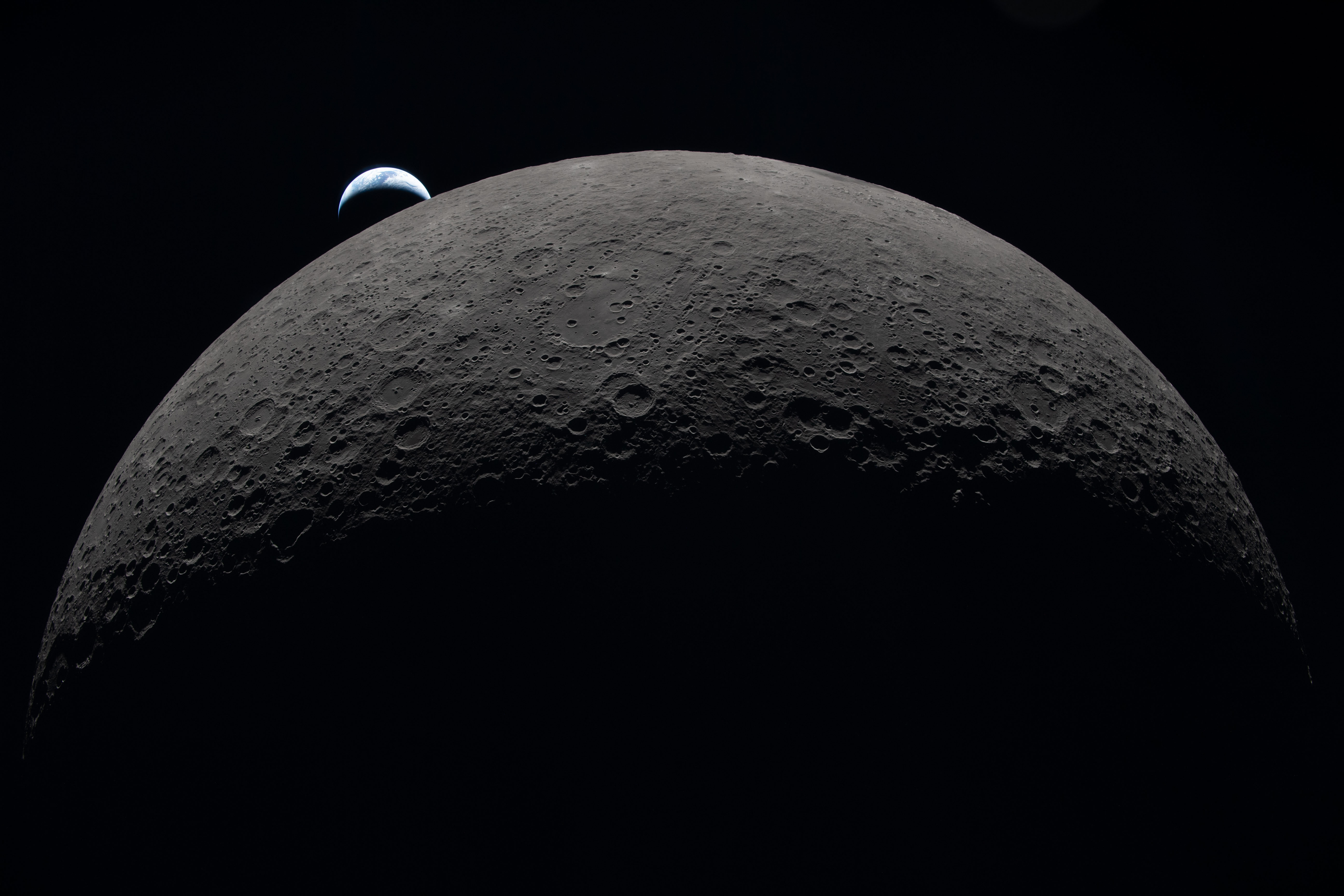
A 20.8 megapixel 5568 x 3712 pixels is not a shitty image. When we get to see those images, they will be much better than the GoPro images we're seeing
adrian_b
6 hours ago
Some nice images with this resolution of the far side of the Moon have already been posted.
jiggawatts
5 hours ago
They also have a 46 megapixel Nikon Z9 which they don't appear to have used for some odd reason...
sorz
an hour ago
I found one taken with Z9: https://images.nasa.gov/details/art002e009301
There are some very bright noise pixels on the dark area, which is different from the noise in similar photos taken with D5 (much darker and uniform).
jiggawatts
29 minutes ago
A common error made with "pixel peeping" is to zoom to 1:1, which shows a smaller physical sensor area with higher megapixel cameras.
The trick is to zoom to the same percentage zoom and compare side-by-side.
I did spot a few "hot" pixels visible on the Moon, but those are easily fixed in post.
RogerL
13 hours ago
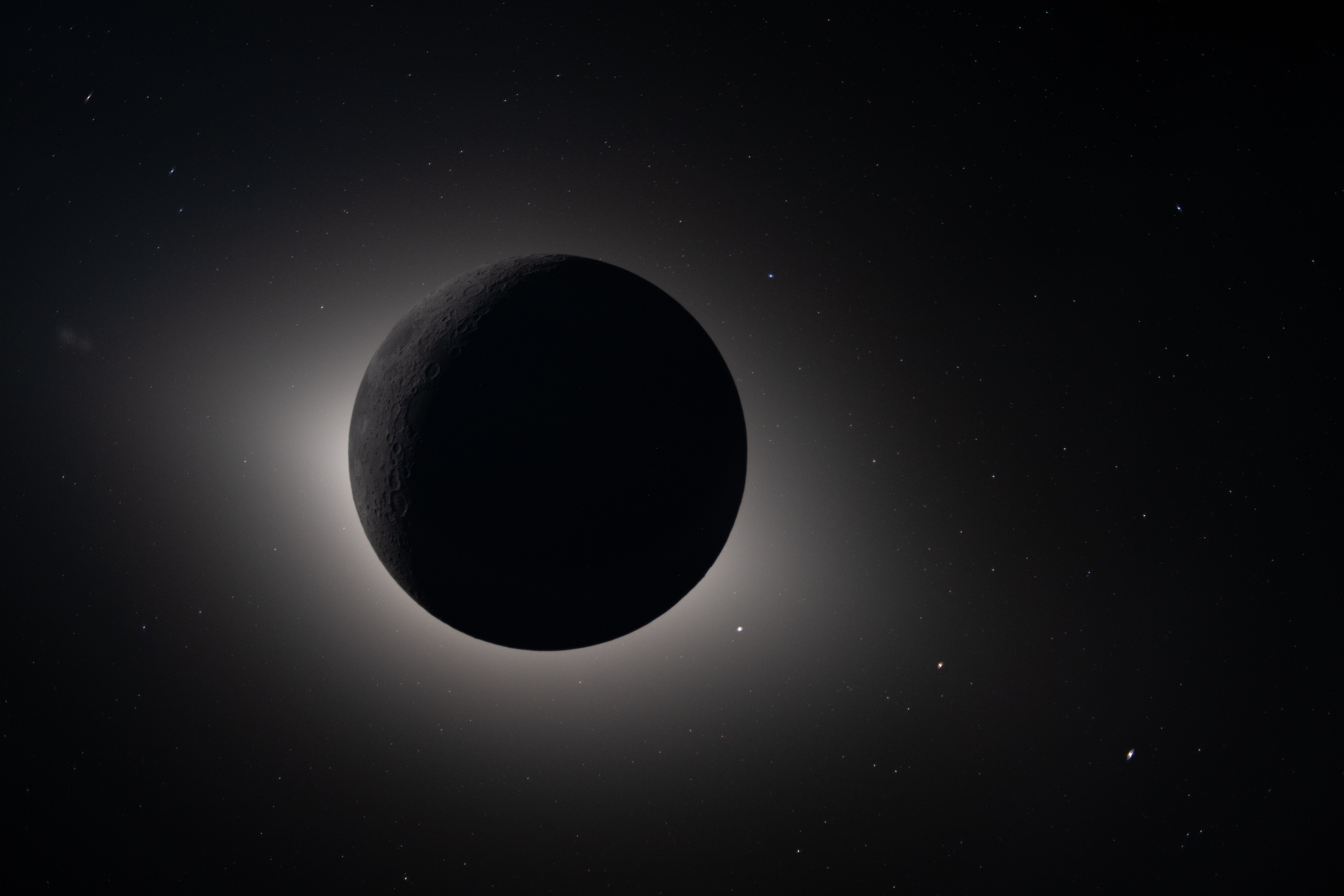
it was light gathering. the D5 they brought is a very old camera tech wise, but it was ideal for the low light photos of the eclipse. they also brought a Z9 for much higher resolution photos.
spartanatreyu
14 hours ago
And my screensaver folder grows larger...
cbhl
13 hours ago
To be fair they "only" have a 20 Mbps laser uplink from the capsule to Earth, and that's shared between all the systems and uploading images/video.
hyperbovine
13 hours ago
_moof
6 hours ago
"Uplink" means Earth to spacecraft. Spacecraft to Earth is downlink.
modeless
9 hours ago
Thanks, these make some kickass ultrawide wallpapers.