PaulHoule
a month ago
What I can't get is that the platforms don't understand that the scam ads reduce trust in the good ads -- when I see something on YouTube that looks legit and like something I want I am very inclined to be skeptical because I just saw five obvious scams in a row. Accepting those scam ads is penny wise and pound foolish.
safety1st
a month ago
The explanation is that the platform firms operate with a high level of market power, which is another way of saying that they benefit from monopoly or near-monopoly effects that make them relatively immune from things like what their customers want.
This is actually textbook monopoly stuff, well established in antitrust literature and well understood by regulators: when you see a firm institutionalizing how to defend criminal activity as a part of their business model, it's a big flag that said firm probably has some kind of immunity from how healthy, regulated markets operate. Why America has decided not to prosecute corporate criminals anymore (given that at various points in its history it was actually pretty good at this) is the really interesting question of our time.
clickety_clack
a month ago
I’d say the real explanation is that individual PMs have KPIs tied to ad sales, and that is more important to them than the overall success of either the company or the ideals of social media.
tempodox
a month ago
Enabled by the fact that criminal acts aren’t being prosecuted. If they were, this kind of behavior wouldn’t last long.
red-iron-pine
a month ago
"my job security and bonus is tied to how much I increase X"
and the company and other teams provide the framework to absolve any moral responsibility -- "the higher ups gave me the tools, and I need to pay rent"
conception
a month ago
The reason started in the 70’s - https://reclaimdemocracy.org/powell_memo_lewis/
thanksgiving
a month ago
Somehow I knew in my heart this was about Ronald Reagan even though you said the seventies.
PaulHoule
a month ago
We remember Reagan because he was a colorful character and vociferous advocate of markets, but the changes we associate with him (e.g. Ralph Nader getting shut out of Congress) started under Carter and were continued under Clinton.
jonners00
a month ago
Er, that example most definitely isn't one of 'the changes we associate with him'.
nickff
a month ago
I suspect that your explanation is what people in those organizations think is happening, but I believe that what’s really going on is that they’re ‘spending’ (and depleting) their brand equity.
socialcommenter
a month ago
I'm not sure it stops there, either - I wonder if others feel the same. If every platform is doing this, then are they destroying the trust of online media (the internet?) in general? Facebook isn't exactly alone in its reputation of monetising people's attention and serving them dangerous content.
I'm eagerly waiting for the day when the elderly people in my family swear off the internet entirely.
llmslave2
a month ago
I think it's more likely that the newer gens swear it off than the older ones, who have become thoroughly brain rotted by it. It's like they have no immunity. At least gen-z is more aware of the damage it does.
We're at the "hmm, I think smoking is probably bad for us" stage. Next up, serious attempts at quitting.
tremon
a month ago
Being immune to the "depletion of their brand equity" is part of the near-monopoly effects the GP was referring to.
nickff
a month ago
I do not believe that those brands are immune.
llmslave2
a month ago
Those brands are not immune at all. Everybody I know (who isn't in tech) has a negative opinion of these brands.
bigbadfeline
a month ago
> Everybody I know... has a negative opinion of these brands.
Not uncommon but they still use them, that's how monopolies work. I mean, people do hate monopolies but that changes absolutely nothing.
The network effect is real and cannot be broken without a concerted media push, which is another can of worms I'd rather not open this year.
llmslave2
a month ago
Something can be both flawed and hated, yet still useful, and still good enough.
There is also a cost to switching products, and that has nothing to do with monopolies. Unfortunately the M word is thrown around to describe basically any company with a significant market share and it totally dilutes the meaning of the term.
awesome_dude
a month ago
This is fascinating - your complaint appears to be that someone used the term "near-monopoly" and you claim that its being used to describe companies with a "significant market share" - which is the actual definition of the term.
llmslave2
a month ago
> This is actually textbook monopoly stuff
?
> monopoly: the exclusive possession or control of the supply of or trade in a commodity or service.
???
A monopoly in an economic sense is clearly defined. It is not "significant market share". The person who started this discussion claimed it was "textbook monopoly stuff".
thfuran
a month ago
In an economic sense, any company with enough market share and control to manipulate market prices or limit its own competition has monopoly power and a pure monopoly is the sort of 100% absolute monopoly that people like to derail conversations over.
awesome_dude
a month ago
The actual words said were
"Near monopoly"
Why the dishonest misrepresentation?
llmslave2
a month ago
"This is actually textbook monopoly stuff" is a direct quote...
I'm not gonna argue on New Years Eve. Hope you have a great 2026 <3
SoftTalker
a month ago
Things go in cycles because people who get into power on a crusade against something are never satisfied that they've done enough to address that issue.
In the gilded age we had robber barons and trusts. That lead to trust-busting and anti-monopoly regulation. Eventually the history is forgotten and people see the current regulations as burdensome. Someone gets into power with a mandate to deregulate, and we eventually end up with monopolies again.
Private enterprise and free markets are good. Monopolies are not. It doesn't have to be one or the other but nobody can seem to take their hands off when we reach a happy middle ground.
RajT88
a month ago
Facebook ads absolutely allow criminal activity.
https://www.thestar.com/news/investigations/we-ordered-cocai...
gruez
a month ago
Only in the sense that USPS "allows" for drugs to be delivered through their service. Here's an image purporting to be for criminal activity:
https://bloximages.chicago2.vip.townnews.com/thestar.com/con...
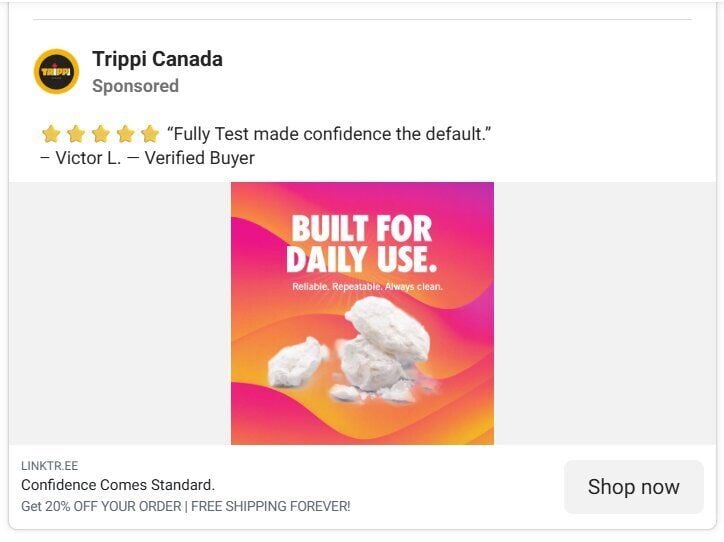
While I can see how this could be "obviously" for drugs if you're specifically looking out for this sort of stuff, it's disguised well enough (eg. no overt references to drugs) that an automated algorithm would have a hard time detecting this without massive collateral damage.
RajT88
a month ago
Some articles on the topic observe that ads like you show above magically disappear once you are across the US border. They likely know exactly what is going on.
monerozcash
a month ago
Hmmm, could it be the Canada-based drug dealer has his advertising set to target Canadian customers only? No, it has to be Meta covering up ... something?
pyrale
a month ago
> the really interesting question of our time.
The answer is corruption.
immibis
a month ago
A single buyer is a monopsony, FWIW
NoToP
a month ago
Recently I've been reading the report of the Knapp Commission, which was a 1972 inquiry into police corruption in New York City. That sounds tangential at first but it really isn't, the findings of the commission are broadly applicable. One of the major points of it being that corrupt officers correctly judged they had very little to fear from prosecution. There's this great table on page 250 showing the complete lack of prosecutions in the years leading up to the commission, driving home the point.
The reasons for that utter lack of prosecution leading to massive corruption is a microcosm of the broader circumstance to which you've pointed out.
Having read the Knapp Commission report, I am no longer of the view I have anything original to say on this.
godelski
a month ago
Don't forget that there's implicit collusion. No back door deals need to be made between competitors when they see they can both benefit. There's a Carlin quote about conspiracy somewhere in there
llmslave2
a month ago
It's definitionally not a monopoly. Just because a company can provide a flawed product and maintain customers doesn't mean they are abusing monopolies. Jfc, it's like people throw darts at a grid to ascribe causes to problems and every square these days is either "capitalism" or "monopolies"
benoau
a month ago
I think it's just not adversely impacting "big tech", their profits and margins are soaring while they've spent years and years selling counterfeit goods, scam apps, scam videos, scam ads. They have no liability for it (section 230 immunity) and seem to have zero incentive to do better.
braiamp
a month ago
Yeah, for them, it doesn't matter. As long as they get paid and nobody important complains, it will stay business as usual.
_DeadFred_
a month ago
Why does 230 protect advertising? I get that it protects platforms for the speech made by users on their platform, but why does 230 protect advertising that the company chooses to accept/run?
benoau
a month ago
I don't know, I don't see why it would protect retail on Amazon either, or apps, none of that stuff is "user generated" they are contractually-bound business partners with verified identities, payments back-and-forth etc. Big difference between that and someone shitposting on Reddit, which ironically gets moderated better than any of them.
amanaplanacanal
a month ago
I thought section 230 only protected against civil liability, not criminal.
Qem
a month ago
They built a meta-scam, on top of other scams.
kfarr
a month ago
It’s a scam made of scams!
sharkjacobs
a month ago
I think the same thing but maybe it’s you and me are wrong. Maybe it’s simply more profitable to run scams than it is to do “legit” business selling “real” products and services. Maybe the users who make ads valuable are the ones who are undiscriminating and naive and vulnerable to scams, and those users aren’t bothered by proliferation of scam ads.
Maybe it does hurt the value of “normal” ads to be shown next to scams, but the scam ads are so valuable that it actually works out as a long term net positive
I think that I used to assume that if scams became prominent enough they would produce a backlash, either regulatory or otherwise, but maybe that’s just not the case.
einr
a month ago
They simply do not care about trust or anything else you think they should care about. The scam ads get probably get clicked ten or a hundred times more than legit ads. This makes money, therefore it is good and should be encouraged. They do not care how much worse the platform gets or how many people get scammed.
user
a month ago
chopete3
a month ago
Money changes psychology. The brains of the people that work in these departments operate differently. They believe in protection and growth of the revenue - not pay attention to ethics.
They have to work hard to shut out critics as long as possible.
observationist
a month ago
It's about getting as much money from the platform for as long as possible, regardless of the externalized damage done along the way. Anything that negatively impacts the "number goes up" goal, year over year, gets suppressed, ignored, or redirected. They hire a sufficient number of people so as to diffuse responsibility and the sense of wrongdoing by any one person or group within the company, and different aspects of the overall abusive mechanics organically get compartmentalized, so that no one manager or employee or department ever recognizes the wrongs being done.
You end up with a few greedy asshats aware of the harms being done that just don't care, lots of money being made, and plausible deniability all around, with things never getting bad enough for an employee to feel like they have to take a stand or report wrongdoing.
zelphirkalt
a month ago
Which quartal number reflects this reduced trust? There is your answer. They never see that negative impact, because they can't see that, which does not happened.
fullshark
a month ago
There's a sweet spot they want to hit, where their internal scam ad reduction efforts do enough to make sure people don't leave in droves, and they are totally fine with the scam ads that make it through bringing in revenue.
The last thing they want is regulators forcing them to spend at least $X in resources to limit scam ads to some target and have it hurt their margins.
thayne
a month ago
> regulators forcing them to spend at least $X in resources
Even if X is 0, it would mean lost revenue from the scammers as well.
yieldcrv
a month ago
When billions are being collected in scams and those organizations are paying for more ads, it doesn't matter what you normally do, it matters what you do when you're emotional, or drunk, or what your parents do
RajT88
a month ago
Exactly. I never ever buy a product advertised on Facebook. Almost without a doubt, the ad turns out to be misleading.
If something looks cool, I will search it instead of clicking through. I have been seen malvertising campaigns on FB (some not even requiring a click).
If the product seems legit and fair priced, I will buy it. Rarely do I find both are true when I learn about it via Facebook. My default is: scam, or at least scamm-y.
Are most people less careful? I wonder.
serial_dev
a month ago
Even if we were to accept that people who see scam ads ona platform will be less likely to trust good ads on said platform (and honestly I doubt how impactful that is), it’s not a metric Facebook cares about.
You are not the customer. The customers are the people paying for the ads, and they will keep using it as long as they think it’s better than not using them.
oh_my_goodness
a month ago
Genuine clicks on useful ads are a tiny part of ad revenue. There’s no incentive for media to work on that slice of clicks.
duxup
a month ago
I don't think they care because I'm still on youtube, but I agree. I think of youtube as a very scamy place.
I have my history turned off so I get some really bottom of the barrel ads, questionable medical advice, gross out ads, borderline porn, weird conspiracy theory stuff (5G blocking hats), and straight scams "buy our product or AI will replace your job" and my recent favorite "if you're not buying our product people are manipulating you ... so give us your money so we can help you" (the irony is thick with those).
Youtube is scam / bad idea central when I turn it on.
snailmailman
a month ago
I get all those same ads on YouTube. It’s easily >90% complete scam products, and most of the non-scam products are at least breaking YouTube’s own “rules” regarding what content is allowed. Like if one of the reportable reasons is “addictive product” why do I see so many ads for nicotine products?
I tried to report an ad that had literal nudity/porn in it. The report page was acting funky so I pulled it up manually in safari where I wasn’t logged in. and it made be log in to report the ad because the ad was age restricted. why is it running as an advertisement at all then? Clearly it got flagged somewhere to be age restricted.
YouTube has approximately zero incentive to fix this. They are a complete monopoly and there isn’t any consequence to any of the blatantly illegal products that I see advertised on their platform. I’ve seen ads for drugs and firearms. The firearm ad was claiming it was “easy to sneak past security” but the highest consequence is that the ad account gets nuked and another immediately takes its place.
trueismywork
a month ago
What's the alternative? Orkut?
PaulHoule
a month ago
There's two markets here. (1) The market of advertisers buying ads and (2) the market of users who are attracted to these platforms and who might click on the ads and buy the product.
I'm not against advertising, in fact many times I have seen something advertised, thought "I want that!" and bought it and sometimes that thing became my new favorite.
If I am a platform user (2) and don't like the ads I can "exit" the platform as a whole or I can "exit" by being unresponsive to ads and when it comes to ads on YouTube and Meta platforms at least, I'm not buying it!
People in market (1) are going to invest in advertising up to the point where it is profitable, and the less responsive market (2) people are the smaller the pool. Many advertisers are also sensitive to brand safety and part of that is the content you are against but another part is the other ads on the platform.
xp84
a month ago
I think the adtech-industrial complex has thrown in the towel on wanting quality ads and customers who trust those ads. It's easier to just welcome in the scammers and accept that the top 80% "savviest" people all know their ads are mostly scams. There will always still be enough marks that the scammers, who have excellent margins to play with, will come to feed at the trough of the ignorant and naïve by buying the ads. If needed, the platform can adjust the ad:content ratio to near 100%. Their 'competition' is all doing the same thing anyway, so they won't lose eyeballs in the aggregate.
oh_my_goodness
a month ago
> many times I have seen something advertised, thought "I want that!" and bought it and sometimes that thing became my new favorite.
This happens. It matters to you and to the people paying for those ads … if they could really quantity it.
But it’s too tiny to matter to the media outlets. You’re talking about real clicks, which are already a small fraction. Real clicks on ads that actually offer anything desirable … that’s just too small a part of total clicks. Nobody can make much money on that 0.5% (?) of the traffic, no matter how idealistic they are. Fake clicks on misleading ads are the bread and butter of the market.
As a vendor, expecting online advertisers to get you customers efficiently is like expecting a real estate agent to get you the best sale price. They care about their own revenue, not yours.
Look at even Amazon's own site. They're hardly bothering to show you real stuff that you actually want. Either they're completely incompetent, or that's just not where the money is.
user
a month ago
al_borland
a month ago
While I tend to agree with you, to the point that I've never willingly clicked on an ad, this isn't how most people that I've seen operate.
I actively skip over ads in search results, skip whenever possible in video, and pay to remove them completely if it's offered (subscribing to Kagi and YouTube Premium). If I do end up seeing an ad for something that looks interesting/useful, I don't click on it. I search for it separately. I treat ads the same way I would a random text claiming to be my bank. I don't click the link, I go there on my own so I know I'm in the right place free of any funny business. The side effect of this is the merchant loses context on how effective their ad was.
In contrast, when I see almost anyone else using Google, they actively look at the ads first. They treat the ads as if they were the top organic search results. If they search for "Microsoft" and Microsoft paid for a top ranked ad to their homepage, they will click on the ad link instead of the real organic result a few lines down. This makes these people very susceptible to advertisements posing at legitimate websites, yet their behavior never changes. I've said something to multiple people about skipping down to the actual results, and they claim to like the ads, or don't see a difference and just pick the first link that seems like what they want. Many of these people are otherwise tech savvy, some of whom spent decades working in the tech sector.
It seems we are the weird ones for avoiding the ads or losing trust. After watching MegaLag's 2 most recent videos on YouTube about Honey[0], I can start to see why the companies behind all this don't care. Policing these types of issues lowers their profits, which effectively incentivizes scams and fraud. The people hurt are the merchants and the consumers. You'd think they would be the only two who matter at the end of the day when it comes to advertising, but apparently not.
[0]
Part 1 (from 1 year ago): https://www.youtube.com/watch?v=vc4yL3YTwWk